
In Rancho Palos Verdes the water that ruins a house usually comes up out of the ground, not down out of the sky.
SOS Restoration covers Rancho Palos Verdes off the same trucks that work Long Beach: water extraction and drying, smoke and soot, mold, sewage, and board-up after a storm. The hill is a slow drive and nobody here will pretend otherwise. Somebody answers at any hour. Call (657) 660-4185.
Which of the five jobs does a hillside house on this peninsula usually need?
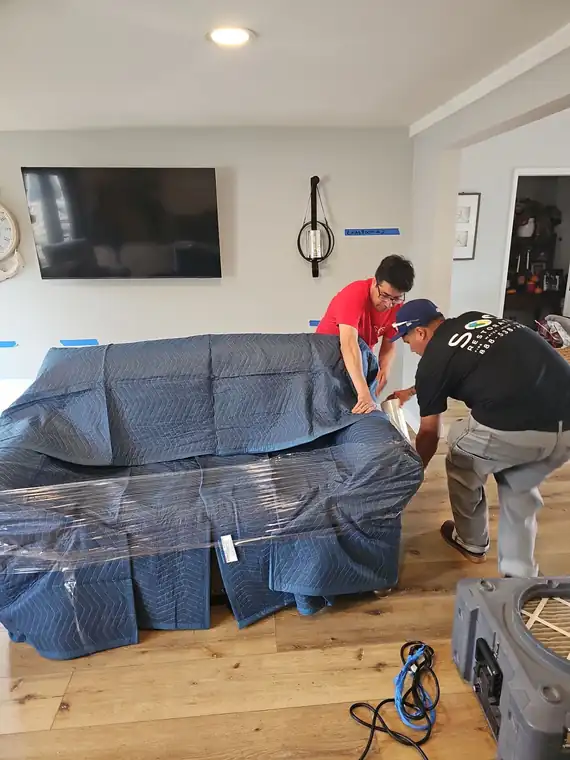
All five come off the same shop that covers Long Beach, and every one of them behaves differently up here than it does on the flats.
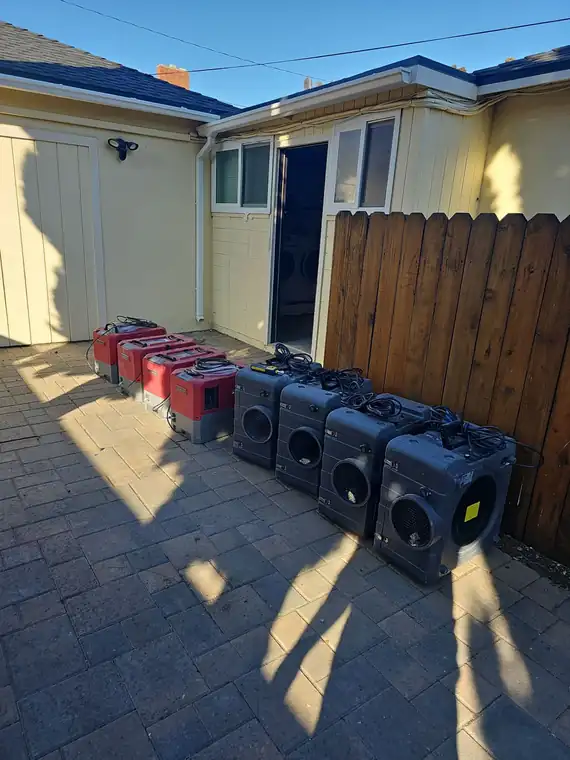
- Water damage on this hill means drying a floor nobody can get underneath. Every flood claim on record in this ZIP code was a ground-level building with no basement and no vented space below the floor, which is what a sixties tract on a graded pad looks like. Nothing opens from below, so the dehumidifiers carry the job.
- Mold removal in these houses is usually the end of a slow leak, not a flood. Hard water opens a pinhole at a joint, it weeps behind a cabinet for a season, and the smell arrives months before anybody finds the source.
- Fire and smoke counts here because most of Rancho Palos Verdes falls inside a mapped fire hazard severity zone under the state map the city adopted for this year. In a long single-story house with an open attic, smoke goes straight up and comes back down through every ceiling vent, so the room that burned is rarely the only room that smells.
- Sewage cleanup is not a rare call on a peninsula where the collection system is being pulled apart by the ground, and where a share of the houses are not on the main system at all.
- Storm damage is roof and envelope work here, and it is also the front end of the slide. The same winter rain that finds a failed flashing is the water the city spends its year keeping out of the clay.
If it almost never floods up here, why is my floor wet?
Because the water is not coming from a storm drain.
In the entire life of the federal flood insurance program, FEMA’s claim file holds nine flood claims for the 90275 ZIP code. Nine. And eight of those nine sat outside the high-risk flood zone, which is a quiet way of saying the flood maps do not know where a house here gets wet. Run the same query on the 90803 ZIP down the hill and it returns 151.
What moves water into a Palos Verdes house is the ground itself.
The city publishes this plainly on its own land movement page. The active landslide complex grew from 380 acres to roughly 700, and at the peak in the summer of 2024 the ground under those neighborhoods was moving something like 80 times faster than it had two years before, close to a foot a week. It is down to about an inch a week now. The mechanism the city names is winter rain soaking down and lubricating a bentonite clay layer, plus a deeper slide plane nobody knew was there. Wells have pulled more than 500 million gallons of groundwater out from under those houses since the fall of 2024, and the power is still off, so the pumps run on rented generators.
Read the city’s own list of warning signs and it reads like a restoration estimate written before the fact:
Now put the houses on top of that. Half the houses on this peninsula are older than 1967 and half are newer, with more than four out of five built between 1950 and 1979, and fewer than five in a hundred built after the year 2000. What stands here is what stood here.
And the water inside those old pipes is hard. Cal Water’s Palos Verdes district has no local wells at all. Every drop is bought from the wholesaler and pushed through 350 miles of pipe, hanging on four connections. Their own quality report puts hardness this year between 191 and 280 parts per million, and the same document warns that water like that leaves mineral buildup in pipes and water heaters. Sixty-year-old supply line, hard water, moving ground. That is most of the calls.
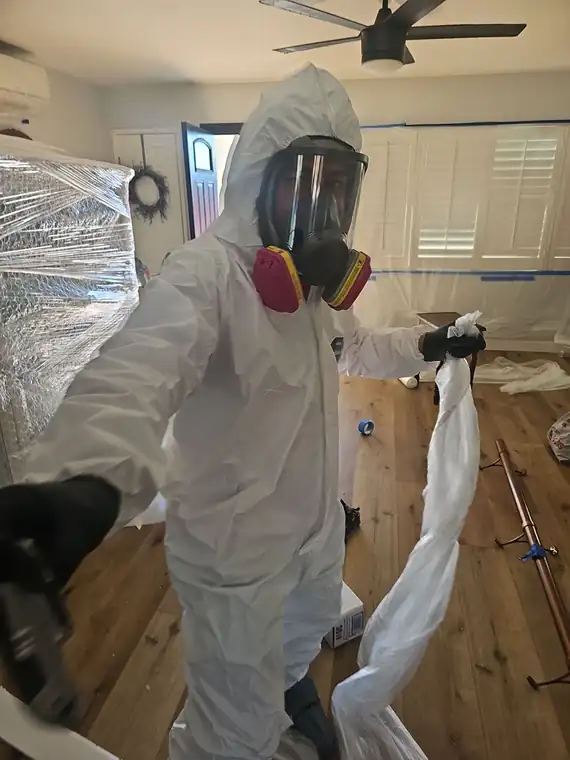
Broken water lines
Doors and windows that stick for the first time in their lives
New cracks in plaster, in tile, in the foundation
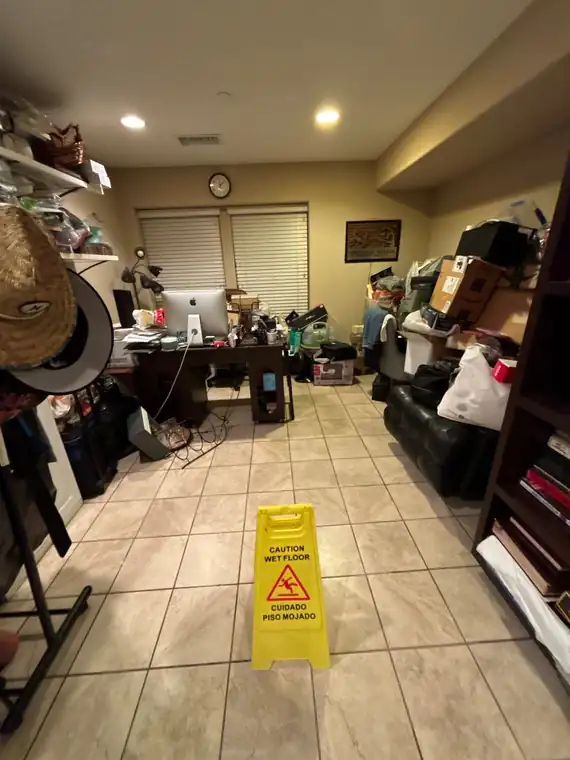
Walls separating from the rest of the building
Water breaking through the ground surface in places it never came up before
How much does the hill add to the drive, and what should I be doing until somebody knocks?
Somebody picks up at any hour. The truck comes up from Long Beach, and nobody here is going to put an arrival time on the phone with you, because the grade, the hour of day and the detours around the slide area rewrite that answer on every run. What is true is that the truck gets loaded for your job before it leaves, not after it parks in your driveway.
The clock before that belongs to you:
- Kill the supply. At the fixture if you know which one let go, at the meter if you do not.
- Cut the power at the panel to whatever room is wet before you walk back into it. In a house wired in the sixties, one bedroom breaker often carries the hall outlets too, so throw the one that covers that whole side of the house if the labels are vague.
- Photograph the room wide, and separately the dark edge where the carpet turns and the base of the wall behind it, before anything moves.
- Write down whether any door in the house has started sticking, and roughly when it started. On this hill that one detail changes what a wet wall means.
- Have the gate code and the cross street ready. Some of these lanes will not take a truck and a trailer, and learning that at the turn costs everybody real time.
Then tell us which room you are standing in. One bathroom takes a pair of air movers with a single dehumidifier beside them. A hallway plus two bedrooms is six movers and two dehumidifiers, and that gets decided in the shop. If nothing is running and you would rather write it down, tell us what happened and it reaches the same phone. Houses in Torrance and Manhattan Beach get the same crew off a shorter drive.
What does the work run, and what does insurance do about ground movement?
Water damage work starts at $60 an hour in Rancho Palos Verdes, and an emergency call-out starts at $90 an hour. Both depend on the job. Neither one moves because you sound frightened on the phone.
Three things stretch the hours: how far the water traveled into the building, how much equipment a slab floor with nothing open beneath it needs to pull that back out, and how many days pass before the meter agrees the wall is dry. One room caught the same morning is a short job. A house that ran all weekend with nobody home is eight movers and two dehumidifiers, and nobody can honestly give you the day count until the third set of readings comes back. Our cost page walks through what water damage restoration actually costs, line by line.
Some of it you do not need anybody for. A supply line under a sink that let go and got mopped up inside the hour is a fan and an open cabinet door. Two days later put your hand along the baseboard and the toe kick under the cabinet. If it is soft, or the paint has bubbled, then call.
The harder money question in this city has nothing to do with our invoice. The city states on its own site that damage from land movement is not usually covered by most homeowners policies, and that the difference-in-conditions policies which would cover it are nearly impossible to find. As of late November 2024, twenty houses here carried a red tag and thirty-seven a yellow one. If your wall is wet and your doors have also started sticking, find out which of those two facts your policy will look at before anyone writes an estimate.
Who owns the sewer under my street, and does that change who I call?
It changes it more here than almost anywhere in the county, because three bodies hold three pieces of the same pipe.
The trunk lines that carry wastewater off the peninsula belong to the county sanitation districts. The local collection lines belong to the City of Rancho Palos Verdes. The lateral, the run between your foundation and the street, belongs to you, and on moving ground that is the piece that goes first.
Then the hillside gets a vote. The county had to lift 2,000 feet of main sewer out of the dirt and run it above the surface along Palos Verdes Drive South, then build 960 feet of new connection over Yacht Harbor Drive to keep one neighborhood served at all. A spill of roughly 10,000 gallons has already happened on private property near Narcissa Drive. In the Portuguese Bend community association area the electricity has been off long enough that the city rents generators month after month for no other reason than keeping the sewage moving.
And a slice of this city is not connected to the main system at all. Those houses run on approved septic systems or on the Abalone Cove collection system, which matters the second something backs up, because call the city is not the same instruction at every address here.
What happens after you leave?
You get a file, and the file outlives the trucks. A reading every day off the baseboard, the bottom two feet of drywall, the subfloor and the framing behind the cabinet, dated, all taken on the same meter. The pictures taken while the room was still untouched. A sketch of the floor plan with the wet footprint drawn onto it. A log of what equipment ran and for how many hours. And a plain account of what got cut out and why: forty inches of drywall on the uphill wall because it still read wet on day two, the carpet pad because it sat in sewage, the toe kick because the cabinet box was wicking water up into itself.
One copy goes to whoever is handling the claim on your policy. The other belongs to the crew that rebuilds, because those readings and cut lines are what an honest repair bid gets built on, and on this hill an estimate written without them is a guess.
The rebuild is a separate job from the dry-out. Drying a structure and putting drywall, paint, flooring and cabinets back are two separate crews under another license, and the second one begins when the readings say the cavity is dry. That second crew is not this one.
Here there is one more question to settle first. Since September of 2025 the city has permanently barred new residential construction and even home additions inside the landslide moratorium area, while still allowing an owner to replace and repair what already exists inside its existing footprint. So the line between a repair and an addition is not a matter of taste in Rancho Palos Verdes. It is the difference between a permit and a dead end.
Ask whoever you hire to put their license number in writing. Then find out whether your parcel sits inside that moratorium area before they sketch anything wider than what got wet. Ask how they plan to handle disturbed paint, because a house built before 1978 needs lead-safe work practices and most of this city was finished long before then. A blank look at that last question costs you nothing standing in your own driveway, and quite a lot once the walls are closed up again.
Nearby
Rancho Palos Verdes is the far southwest corner, out past Torrance on the peninsula; Carson sits between it and Long Beach.
Can't call right now? Send it and we call you.
Your phone number is the only thing we really need. Everything else helps us load the truck right.
If your Rancho Palos Verdes house is wet, burned, or backing up tonight, call <a href="tel:+16576604185">(657) 660-4185</a>, and have the gate code ready before the truck starts up the hill.