
In Paramount a lot of these calls come from mobile homes, where the water is under the floor long before it shows on top of it.
We do water damage restoration, mold removal, fire and smoke, storm and sewage cleanup in Paramount, California, at any hour of the night. Paramount is a short run north out of Long Beach, well inside the area we work. Labor is billed by the hour. (657) 660-4185 rings a person, not a machine, and Spanish is fine.
Is it the pipes, or is it the rain?
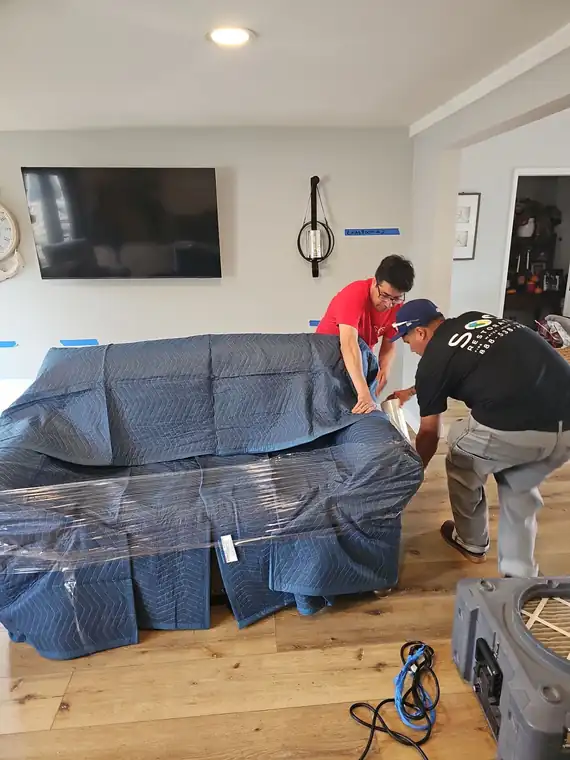
It is almost never the rain. What fails here is the plumbing inside a house that has been standing a while: galvanized supply pipe, the old steel kind that rusts closed from the inside until the opening is no wider than a straw; cast-iron drains going the same way; and angle stops, those little oval shutoff valves under the sink, that seize the first time in twenty years anybody tries to turn one.
The Tuesday calls are the sink ones. A supply line lets go under a kitchen while everybody is at work, and somebody gets home at six to vinyl that has lifted and a dark line along the toe kick, the low board tucked under the cabinet. Half the houses in Paramount went up before 1970, and at that age those three failures are the ordinary reason a floor is wet.
Then there are the mobile homes, and those dry differently from the first minute. One home in nine in Paramount is a mobile or manufactured home, which is the Census figure and the reason we ask on the phone which one you are standing in. The floor there is a sandwich: floor covering, decking, insulation, and a sheet of heavy plastic stapled across the underside of the frame, called the belly wrap. Water that gets past the covering drops into that cavity and the belly holds it like a bag. Supply lines and heat ducts run through it too. That is why a meter can read dry at the baseboard while the insulation two inches under your feet is soaked.
Countywide, mobile and manufactured homes are 1.6 percent of the housing. Paramount is its own case, and the truck gets loaded for that before it leaves the yard.
So the first move on a manufactured home is to get underneath it, and sometimes to cut the belly open and re-seal it afterward so the water has somewhere to leave from.
In either kind of house the expensive mistake is the same one, which is waiting to see whether it dries by itself. On the mobile home calls nobody opens the belly, because the floor still feels solid underfoot, and the smell shows up long before anybody thinks to put a meter on it.
Do you do all of this on a mobile home, or only the water?
All five, on the one number: water damage restoration, mold removal, fire and smoke cleanup, storm damage and sewage cleanup, the same five we run out of Long Beach. What changes in Paramount is the building they happen in.
If it is easier in Spanish, say so when you call. Se habla español.
The same crew covers Bellflower on the east side and Lakewood past it. The houses over there are close enough in age that the truck loads much the same way.
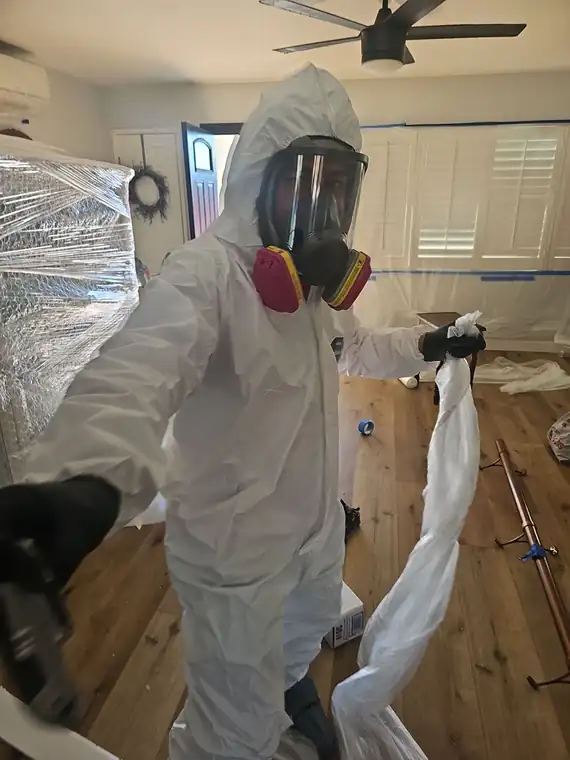
A water damage restoration job in a slab house turns on the readings at the bottom plate, the flat board the wall studs stand on, and the first foot of drywall above it
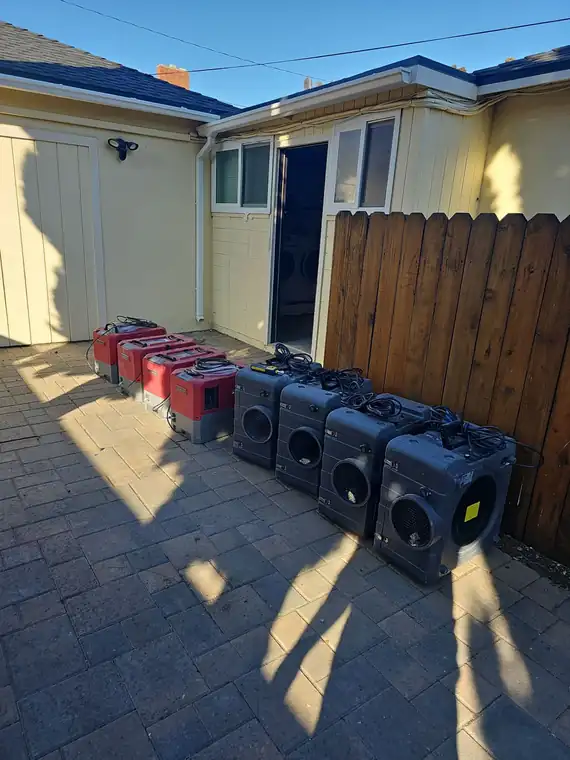
The mold removal and inspection work here is usually old, small and behind something
Fire and smoke damage cleanup covers board-up, soot, odor and contents
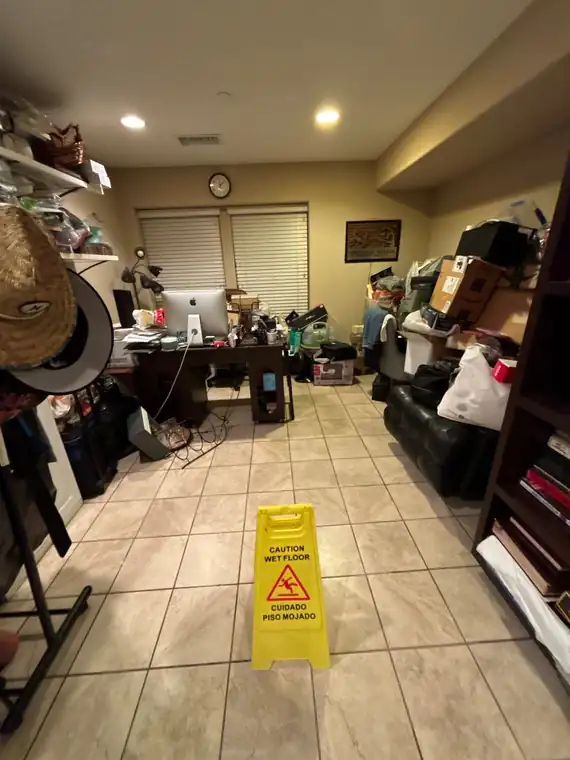
Storm damage restoration in Paramount is mostly ponding, not wind
Sewage cleanup starts at the lowest fixture, which in these floor plans is usually the hallway tub
How fast can someone get to Paramount?
We are open 24 hours, and Paramount is the next city up from us, inside the ten miles we cover, so when a truck is loaded and idle we leave while you are still on the phone. When we are six hours into a contaminated job somewhere else, it can be the next morning instead. You will hear which of those two you are getting when you call, before you decide whether to keep waiting on us. A time in minutes is the one thing we will not say. Anybody who quotes you an arrival time at midnight is reading a script instead of looking at a map.
What to do before we get there
Shut the water off at the house. If it has to be the meter or the main, Paramount runs its own water system, so the after-hours desk is the City’s and the number is printed on your water bill. About one address in fifty here is on Golden State Water instead. Check the name on the bill, because if it says Golden State you are calling somebody else’s desk. Then go find the meter box out by the sidewalk on a dry afternoon, before the night you need it.
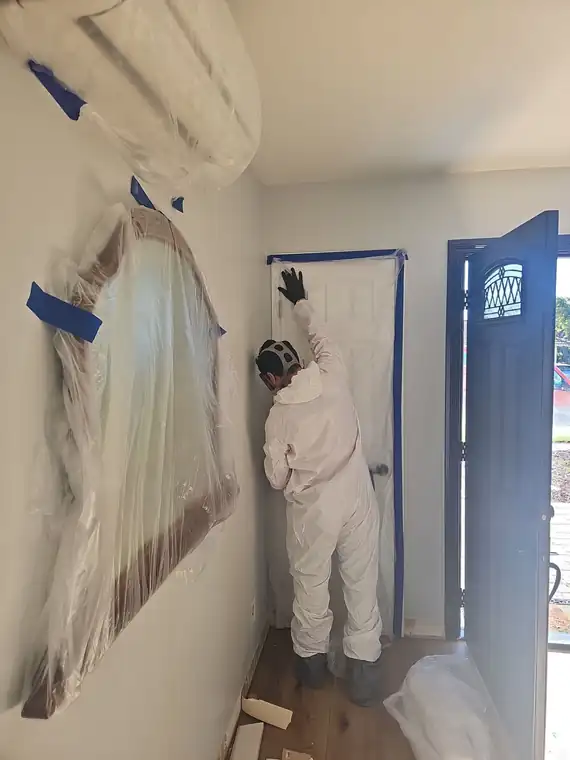
Then tell us the room, what the floor is made of, how long the water ran, and whether it came out of a pipe or up out of a drain. That is what gets counted onto the truck before it leaves. A wet twelve-by-fourteen bedroom with the first foot of wall gone dark is two air movers and one dehumidifier. A hallway tub that came back up is a plastic barrier over the doorway to hold that air in one room, a heavier machine, and the crew arriving in protective gear. Hours and the rest of it are on the contact page.
How much does damage cleanup cost in Paramount?
Restoration labor in Paramount starts at $60 an hour for water damage work; an emergency call-out starts at $90 an hour; both depend on the job. Nothing about the address changes that rate. The hours do.
Underneath the price question is the one people are actually asking at one in the morning, which is whether the hours get padded while they are frightened and not counting. So: hours are logged per person per visit, with the arrival and departure time on each, and that log goes in your file. If you want to see it in the middle of the job, ask, and it comes up on the tablet. What moves the number is how many air movers and dehumidifiers the space needs, how many days those machines run before the readings stop dropping, how much material has to come out, and whether the water was clean or came back up a drain.
A manufactured home is smaller and usually runs more days on the machines, because the wet is sealed under the floor where moving air never reaches it until the belly is opened. An 1,100-square-foot mobile home on a Paramount street can take longer than a slab house twice its size.
Plenty of these calls should not be calls. A glass knocked over on the vinyl and wiped up while it was still shining is yours, not ours. Lift the nearest floor grate and put a phone light down the duct. Dry metal means the spill never got past the covering, and there is nothing under there for us to charge you for. The one worth a second look is a slow drip under a sink, since the belly holds what the towel never reached. Sniff that cabinet a week later.
The line-by-line version, including what belongs on a mitigation invoice and what does not, is on the cost page.
I am renting. Do I call you, or does my landlord?
If you rent in Paramount you can call us yourself, and we will come look and tell you plainly what is wet. The owner or the property manager is who authorizes the work and who the invoice goes to. The lease decides the rest, and nobody here reads leases.
That is how most of these calls run in this city, because most homes in Paramount are rented rather than owned. The person standing in the water is usually not the person who signs.
Call anyway, then text your manager the same night with photographs. Every hour the material sits wet is more of it gone, and a wet baseboard photographed tonight is a smaller argument than a moldy wall found in March. Send the photos with the time showing on them. That timestamp is what the argument turns on later.
What happens after you leave?
The paperwork is the part that outlives the job, and once the water is gone it is most of what you paid for.
In it: every room shot before anybody moved anything, a moisture map, which is a drawing of your floor plan with the wet areas marked on it, the daily readings, an equipment log saying what sat in which room on which day, and a list of every piece of material that came out of the house. Those readings get measured against a dry standard. That number comes from a dry room in your own home, not from a chart. When the hallway reads dry, it is dry against your own back bedroom.
Putting the rooms back is the next trade’s work: drywall, texture, paint, baseboard, floor covering, and on a manufactured home the decking and belly wrap that had to be cut. It starts once the equipment is out and the numbers hold flat two days running. Hand that contractor the moisture log so they know the day each material read dry. Get their license number before they start. The scope they write should name materials and quantities, sheets of drywall and linear feet of base, not just hallway. And have them read the final moisture numbers before anything gets closed up.
If something reads wet a week after the fans are gone, call us. We come back on that ticket.
Nearby
Paramount is the northern edge of the map for us: Bellflower on one side, Lakewood a few minutes south, Long Beach at the end of the drive.
Can't call right now? Send it and we call you.
Your phone number is the only thing we really need. Everything else helps us load the truck right.
If you are standing in water in Paramount tonight, call (657) 660-4185 and say whether it is a house or a mobile home, because that changes what we load before we leave, and somebody picks up at any hour.