What to do in the days after water, fire or mold damage in Long Beach
You already have the wet floor, the smoke smell, or an estimate you cannot read. These twelve guides from SOS Restoration of Long Beach answer what usually gets asked next, grouped by when people ask it. If it is happening right now, put this down and call (657) 660-4185.
None of this is what you need while the water is still running. Go to water damage, sewage backup, fire and smoke, storm and roof leaks or mold, do the first thing on the page, and call.
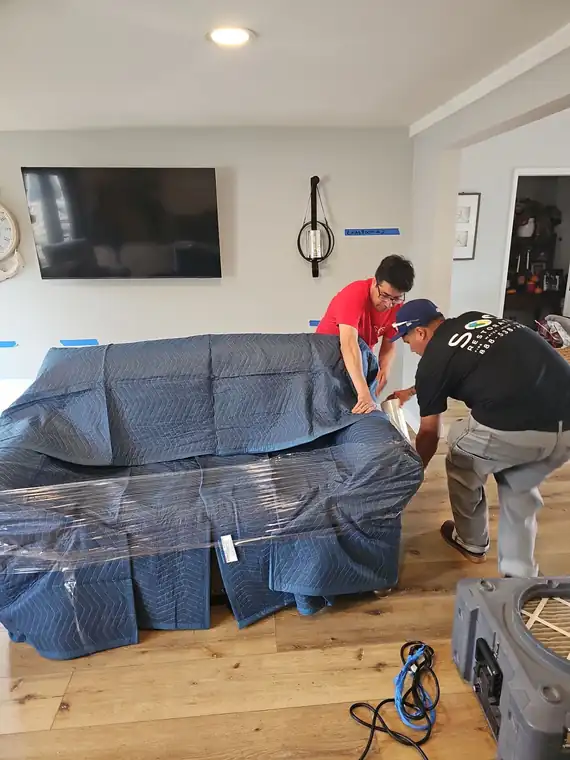
Pipe burst? What to do in the first hour
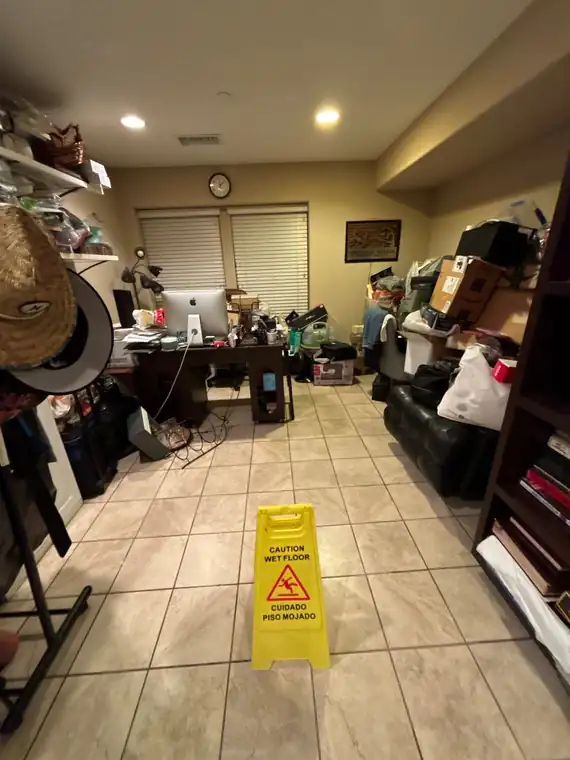
Three Days of Fans and It Is Still Wet
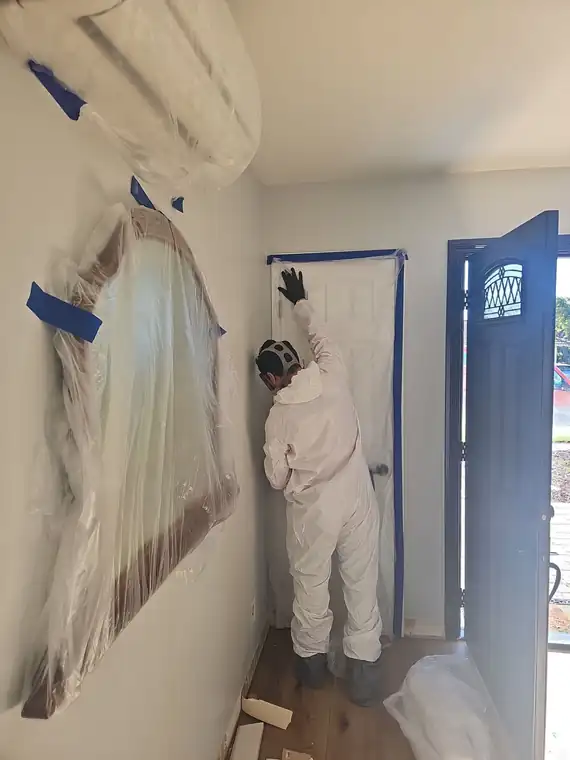
Why Category 3 Water Costs More to Clean
What to photograph before anything moves
Is Mold Testing Worth It, or Is It a Scam?
Does homeowners insurance cover mold?
What a Home Inspection Misses About Mold
Can We Stay in the House During the Work?
Smoke Damage When the Fire Was Next Door
Water From the Unit Upstairs: Who Pays?
Why the first insurance check is smaller
What does O&P mean on my damage estimate?
What do I do in the first hour?
The first hour is mostly one job: get the water shut off at the valve that feeds the whole house. More than half the homes in this city went up before 1960, so that valve is rarely where a video says it will be. Behind a hinged panel in the hallway. Out at the sidewalk under a hedge. In a crawlspace nobody has opened in years. Read the first guide standing up.
- The first hour after a pipe bursts goes minute by minute: where the shutoff usually sits in a Long Beach house of your era, what to lift off the floor first, and when the electricity is the thing that should scare you rather than the water.
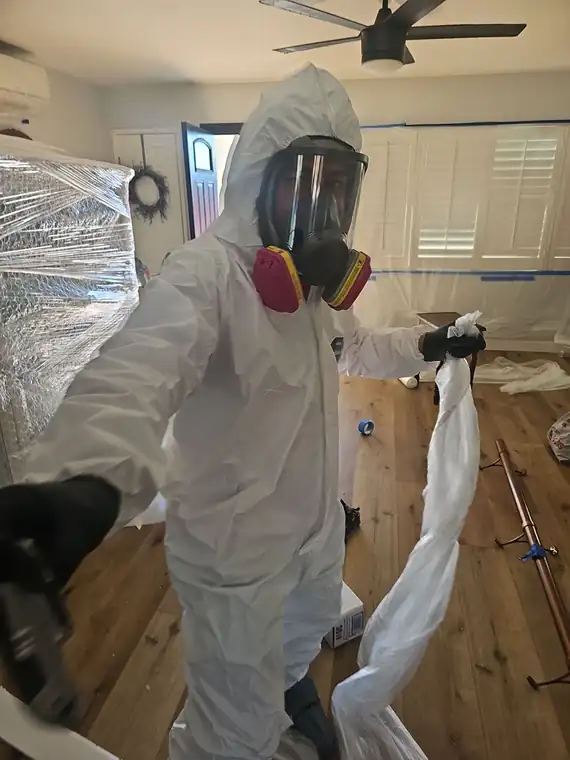
- Before you drag anything into the hallway, read what to photograph before anything gets moved. The source, the serial plate on the water heater, which is that metal sticker with the model number on it, and the ceiling above. Those are the three the insurance company's adjuster asks for six weeks later, and they are the three nobody shoots.
- Your unit never burned and it still smells. The fire was next door. What about the smoke in my place? covers what smoke does to a place it only passed through, and which part of the cleanup the master policy, the one your HOA carries on the building itself, usually picks up.
Is this normal, or is something going wrong?
By the second day the panic is over and the doubt starts. The floor still feels damp, the machines are loud, and somebody has said the word mold.
- Three days of fans and it is still wet is for anyone who rented equipment from a hardware store and cannot work out why nothing changed. A fan moves air. It does not take a drop of water out of anything, and leaving the room open to the rest of the house is part of why.
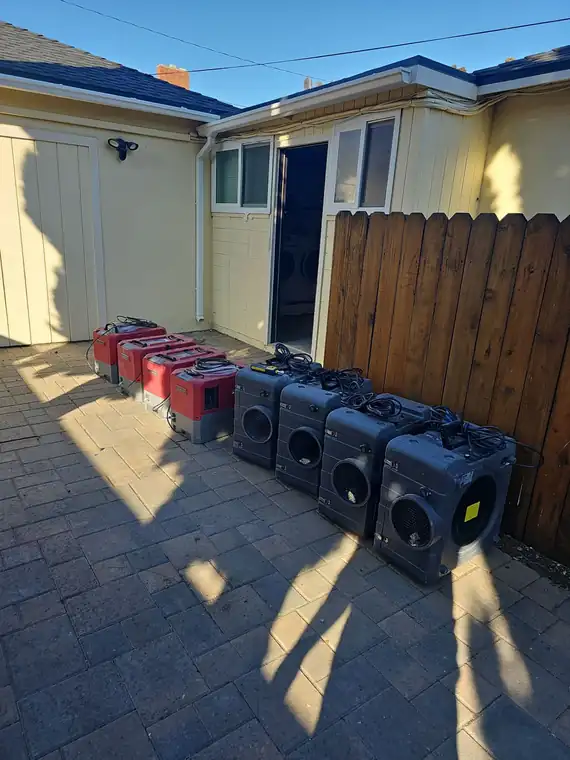
- Can we stay in the house while you work? Usually yes. The exceptions are the jobs where four air movers, the low blowers that sit on the floor and push air along it, have to live in the only bedroom, and anything involving sewage.
- Is mold testing worth paying for, or is it a scam? A spore count, the number a lab hands back after somebody samples your air, does not tell you whether a house is safe to live in. If you can see it or smell it, the decision is already made, and what the state health guidance actually says about that sits on the mold page. The guide walks through the few times a sample earns its price.
Why is my estimate full of things I do not understand?
This is the kitchen table stage, and the fear underneath it is that you are about to be short thousands of dollars without ever understanding why. Two longer pages carry the main answers, how a water damage claim works and what the work costs. The four guides below take the lines people re-read at midnight.
- Who pays when the water came from the unit upstairs? The neighbor says talk to the association, the association says talk to the neighbor, and your bedroom ceiling is still stained. Four in ten homes in this city sit in buildings of five units or more, so the argument happens here constantly. The CC&Rs, the rulebook your building was sold under, settle it, and the guide tells you which section to open first.
- Why category 3 water costs more than a clean-water leak sorts water into three grades, the way the S500, the drying industry's reference document, defines them. Category 1 came out of a supply line and is clean. Category 2 sat a while, or came out of a dishwasher. Category 3 is the dirty one: sewage, and anything that came back up a drain. The grade decides what can be dried where it lies, what goes into a bag, how many hours of labor the room takes, and what the dump charges to take the rest. A clean leak that sat for a week is not a clean leak anymore.
- The check came and it is thousands short. Why the first insurance check is smaller than the estimate explains depreciation, the money held back for age and wear, and what recoverable means, which is the difference between being underpaid and being paid in two parts.
- What does O&P mean on my estimate? Overhead and profit: the contractor's cut for running the job. Ten percent, then another ten percent, on a bill you never wanted. The guide covers when the line usually shows up and what to ask about it.
Does insurance cover mold?
Sometimes, and it usually turns on the leak rather than the mold. What most policies ask is whether the water event underneath was covered and how long it ran before anybody noticed. Both questions below tend to arrive late, when somebody is already in escrow or reading a policy for the first time.
- Does homeowners insurance cover mold? Most policies handle it across three separate sections: whether the water event that caused it was covered at all, a mold sublimit that is a much smaller cap set aside just for mold, and what happens when a leak ran for months in a wall. The guide shows you where to look in yours.
- What a home inspection does and does not do about mold is for whoever is in escrow. A home inspector looks, taps and writes possible moisture in a report. A mold assessment means somebody cuts, samples and tells you how far it went. Knowing which one you paid for is worth real money on either side of the deal.
If you are reading this at two in the morning because it is happening right now, put the guide down and call (657) 660-4185. Somebody in Long Beach picks up at any hour.