
The dryers are gone. Who closes the wall?
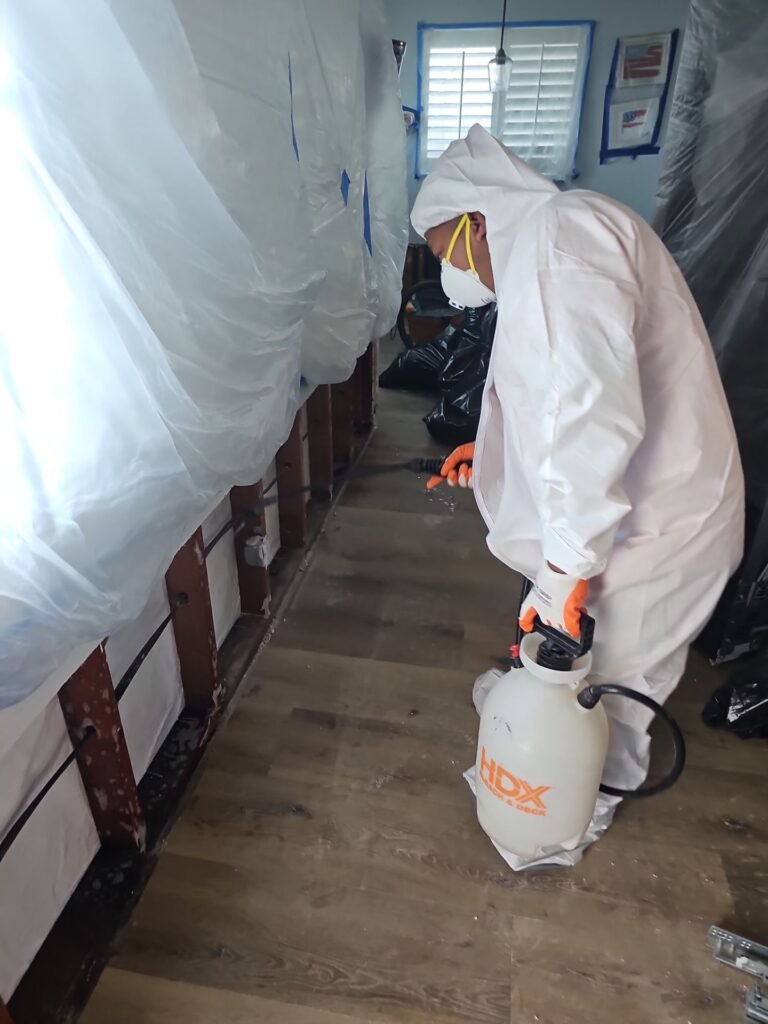
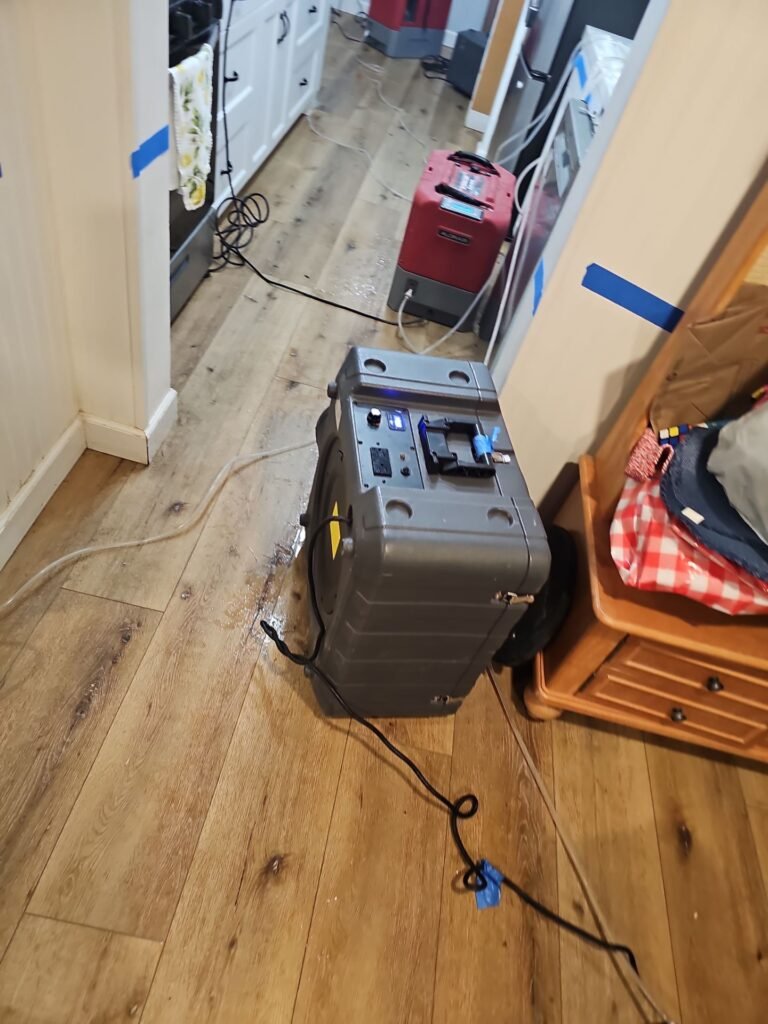
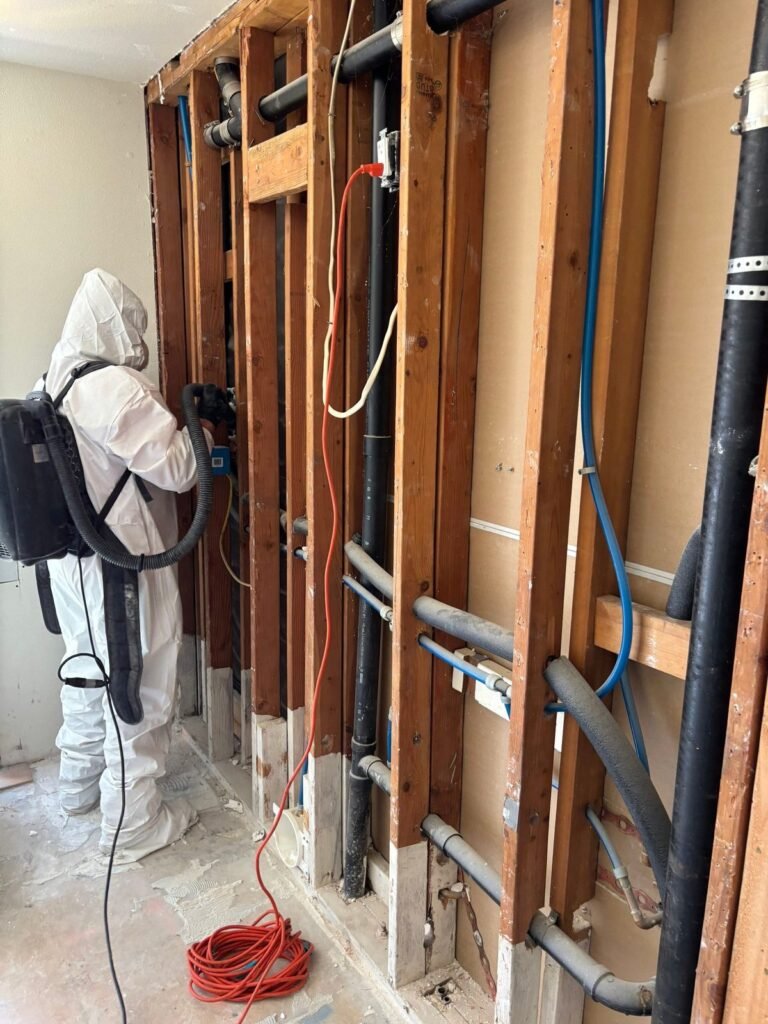
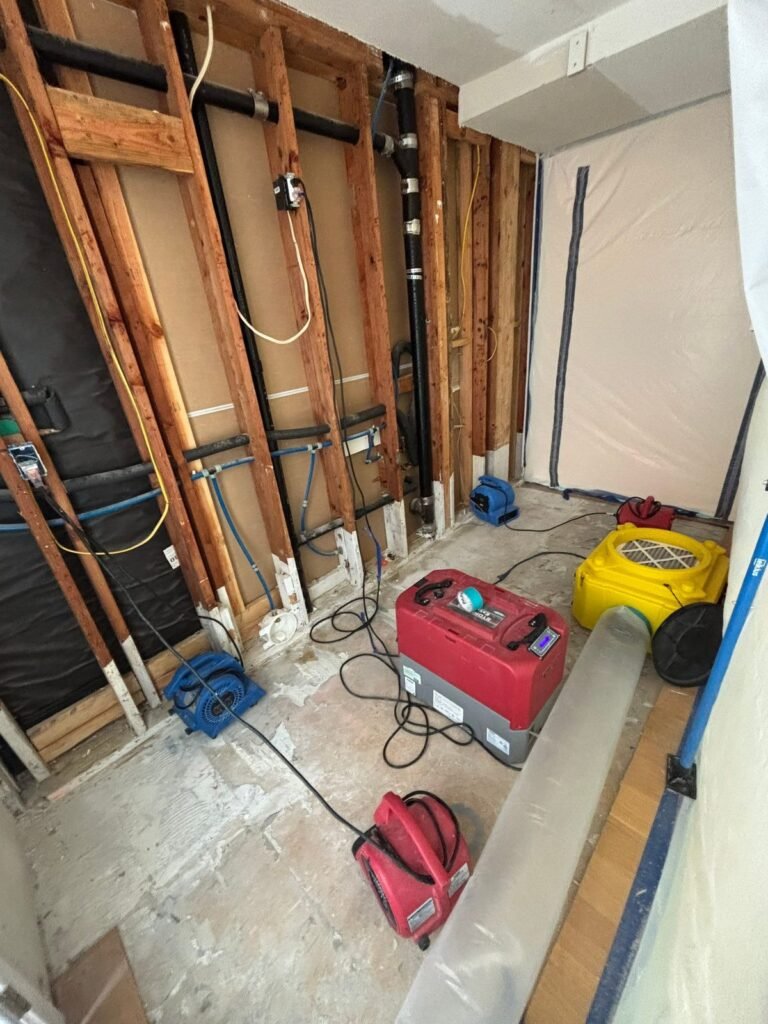
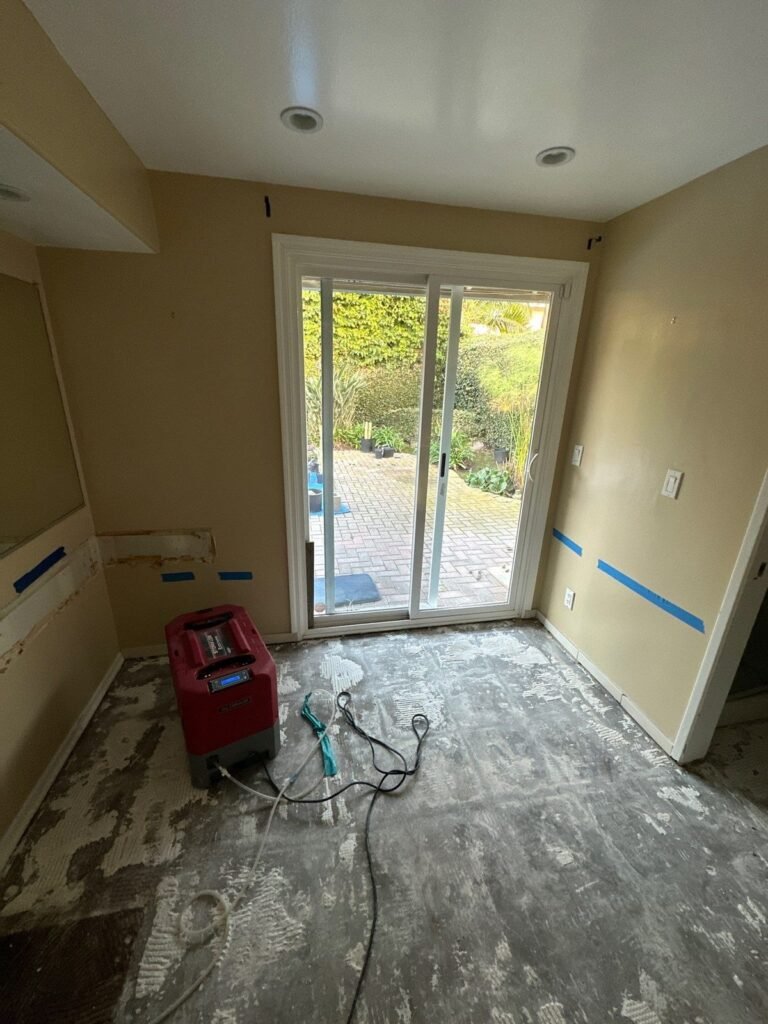
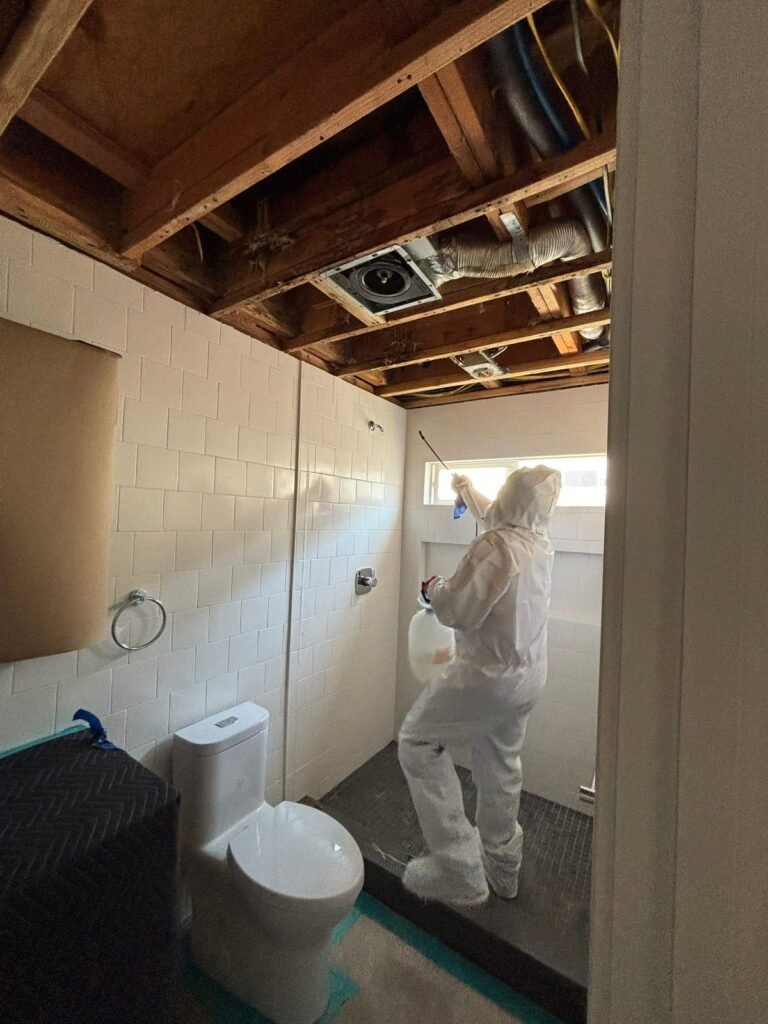
The equipment went out the door and nothing came in behind it. Studs are bare, the baseboard is in a bag, part of the ceiling is missing. That gap is the rebuild, and in Long Beach we do that half too.
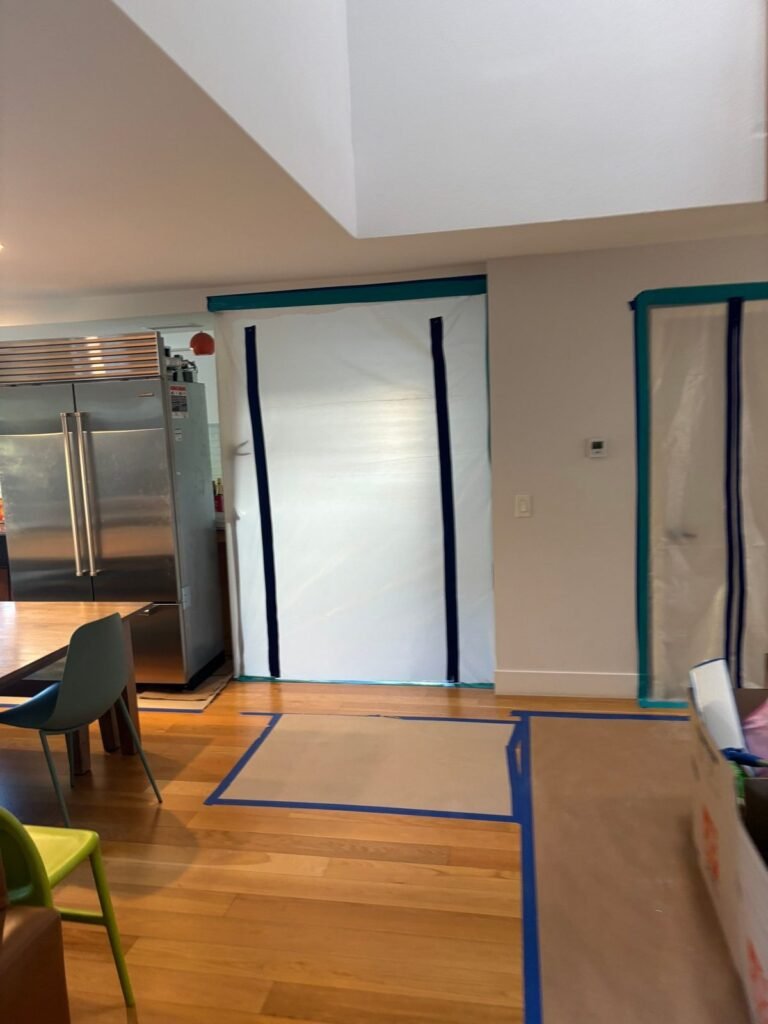
Why did the job stop?
Two different jobs got treated as one, and only one was contracted.
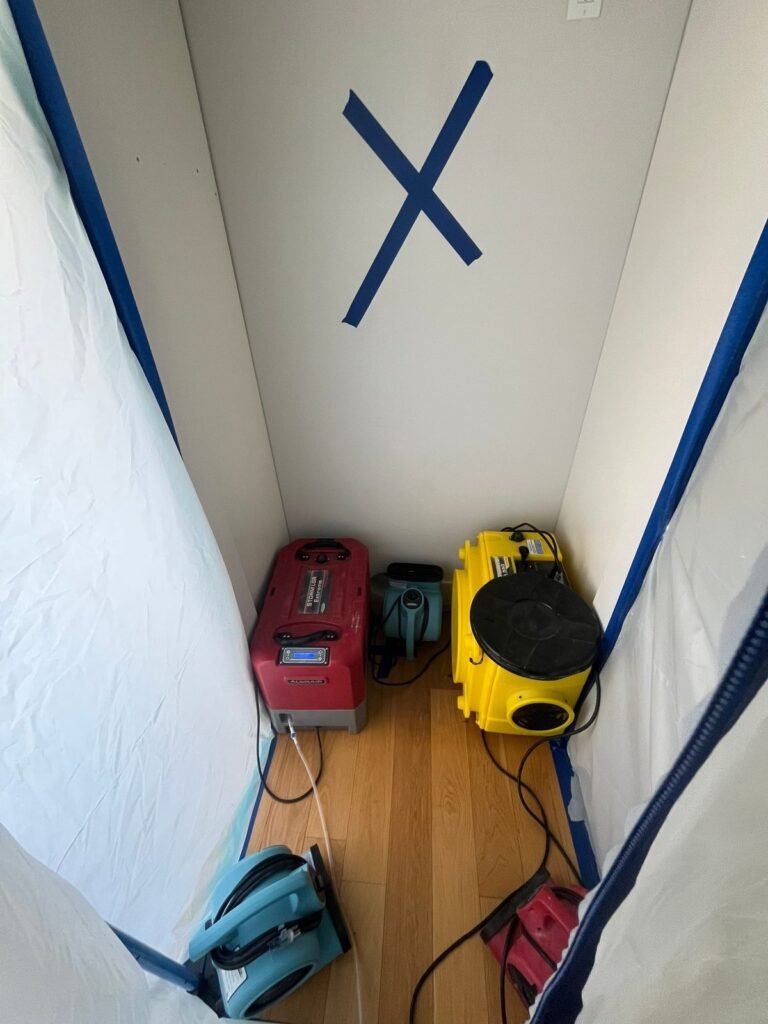
The first is mitigation, which means damage control. Pull out the wet material, dry what is left, keep the damage out of the rooms still fine.
Nobody can price that on day one. Nobody yet knows how long the wet framing will hold its water. A flat quote before anyone reads a meter is a guess with your name on it.
Our mitigation labor is billed by the hour, starting at $61, $69, $79 or $90. The cost page breaks that down.
What makes the rebuild different?
California will not let anyone start it on a handshake.
Insulation back in the bay, drywall hung and taped, texture, paint, base, floor. That is a home improvement contract.
The dollar total has to sit on the page before anybody drives a screw. Business and Professions Code 7159 puts it there, to keep an open-ended bill off your table.
So there is a pause, and the pause is legitimate. Somebody measures what came out and puts a number on paper you read before signing.
You are not forgotten. You are between two contracts.
Do all of them rebuild?
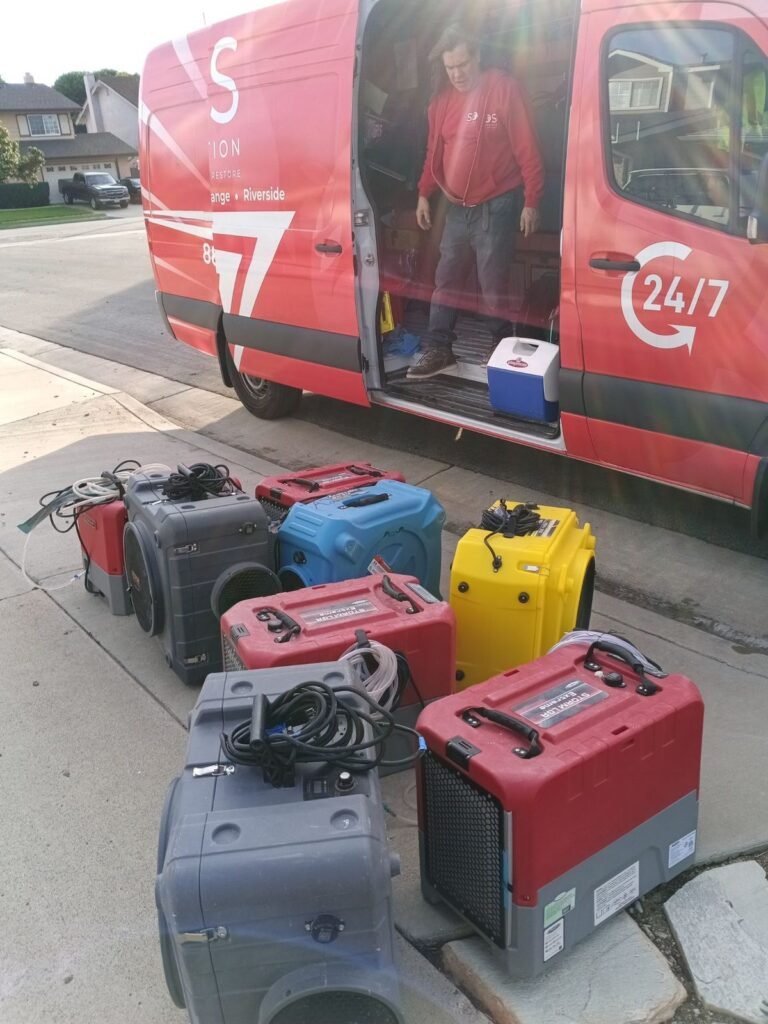
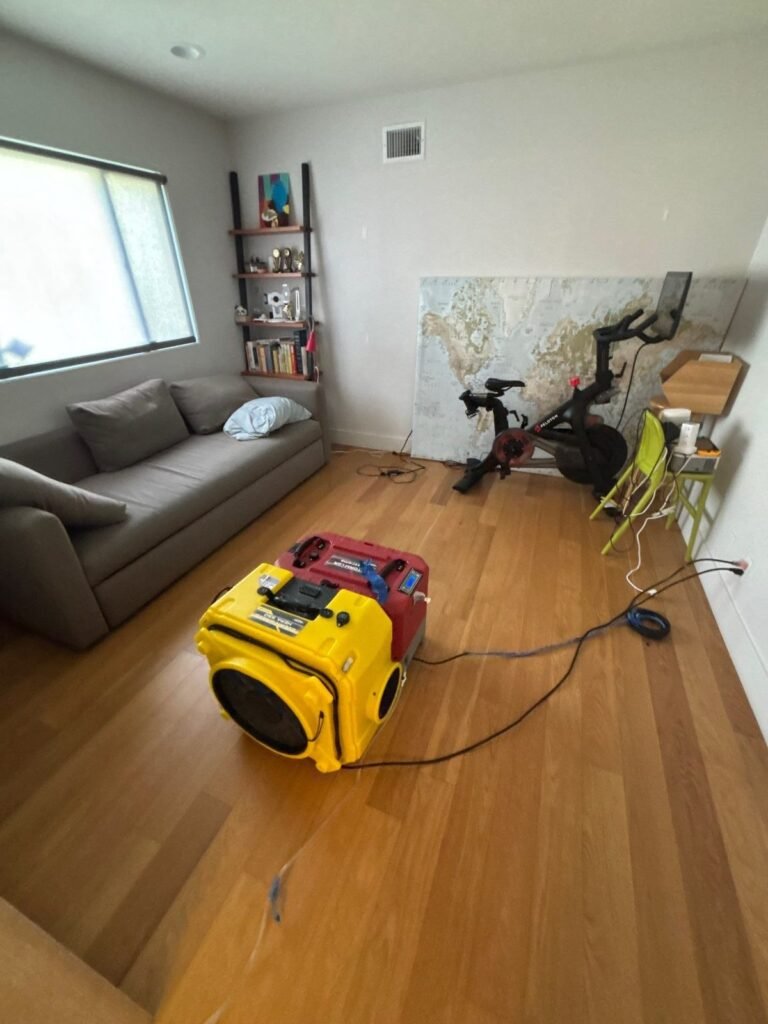
Many only dry. Ask before anybody unloads an air mover.
Plenty of outfits here dry and nothing else, and they are good at it. The day the numbers read dry they load out and hand you a folder at the door.
Then you go find a contractor. Some will name one for you. Some will not.
We do both. The structure gets dried, then it gets put back, under one crew lead who watched the water come out.
Which numbers do I look up?
Two: the contractor license and the drying credential, both public.
CSLB #1131134 carries the rebuild half. IICRC #70194273 covers the drying and cleaning side. Write both down and check them yourself.
Any footer can carry a reassuring adjective. A number you can pull up in a public database is a different kind of claim.
Why does one crew matter?
Nothing gets found twice, because the wall was opened by the same hands.
The crew that cut the drywall on a water damage call knows which studs got wet. Where the plumbing runs, how far the wick went up, whether there was mold behind the baseboard.
After a fire and smoke loss that matters more. Sealing before painting is a call made from what the crew smelled in the room.
Which trades does a rebuild need?
Six or seven on a bathroom, and each waits on the last.
- Framing: sister or replace studs and subfloor, once the structure is dry
- Plumbing: reset supply and drain, after the original failure is repaired
- Electrical: replace soaked outlets and wire, inspected before the wall closes
- Duct work: cleaned or replaced after a sewage backup under the house
- Insulation: new batts in every opened bay, once the framing reads dry
- Drywall: hang, tape, mud, sand, match texture
- Paint: prime, seal, finish, blend into what stayed
- Flooring: underlayment, membrane, plank or tile, transitions
- Cabinets and counters: fabrication time on stone holds these up
- Roofing after storm damage, once the leak source is actually closed
A rebuild is a scheduling problem as much as a construction problem. The honest answer to how long is a range that tightens once materials are confirmed.
Matching is where the budget moves. A wet plank in the middle of a continuous floor is not a plank problem. It is a question about how far the new material runs.
What should the folder contain?
Six things, and the next contractor prices your job off them.
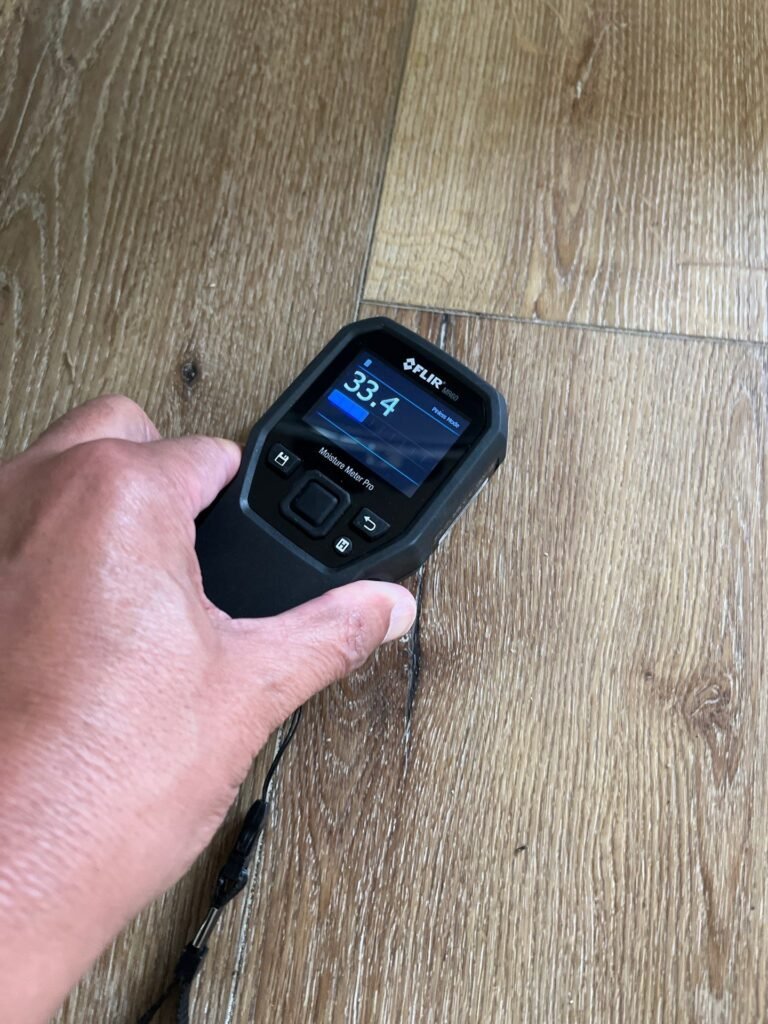
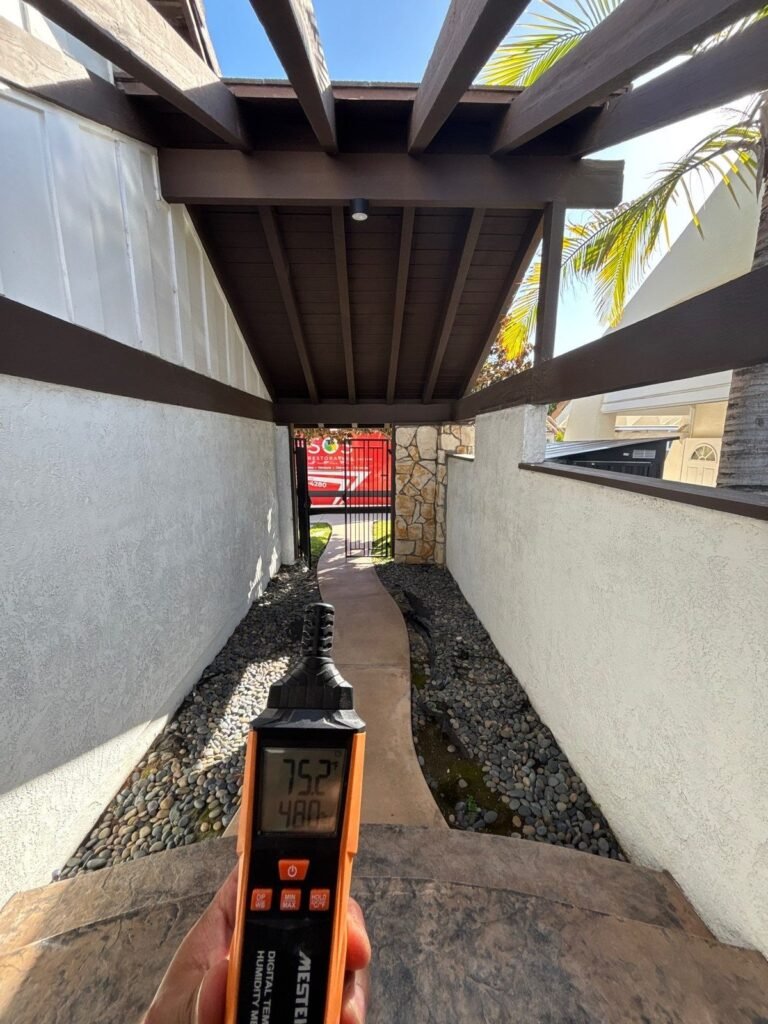
- Moisture readings, initial, daily and final, by material and location
- The equipment record: how many machines, what size, which rooms, how many hours
- Labor hours, since the first half is the invoice
- Photos wide for the room and close for the material
- A demolition map of what came out and how far up the wall
- The stop point: a dry standard reached on a named date
On mold work, clearance sampling comes from an independent lab, never from the crew that did the removal.
If a company cannot produce that folder, the next contractor guesses at what is behind the paint. Guesses get priced high, because the man guessing is protecting himself.
What do I ask before signing?
Ask them out loud. Annoyance is itself an answer.
- What is the total price in dollars, not a range or an hourly rate
- What is the license number, and can I look it up now
- Is the scope itemized by room and by trade
- What is the down payment, and where is the legal cap written
- Do the payment milestones follow work that already happened
- Does a surprise behind the wall become a signed change order first
- Who pulls the permit
- What are the allowances for tile, fixtures and hardware
- How far does matching run on floor, paint and texture
- Who honors the labor warranty, and do I get lien releases
- What are the start and completion dates
A lien release is the signed page saying a subcontractor has been paid and will not claim against your house.
Repair bathroom is not a scope. Hang and finish six sheets of half inch, texture to match, two coats, is a scope.
One more belongs on paper: your right to cancel. Three business days on a standard contract, seven when the damage comes from a declared emergency.
One company or two?
Either works. What fails is assuming somebody will handle it.
One company means no two-week gap while a new contractor finds time to look. It also means one phone number when something goes wrong.
Two companies give a second set of eyes. That has value when drying and rebuild get priced by the same hand. If you already have a builder you trust, use him.
Ask on day one whether the company drying your house intends to rebuild it. Write the answer down.
What happens after you leave?
The day the meters read dry is no longer our last day.
Insulation goes back in the open bays, board gets hung and taped, then texture, paint, base, floor and fixtures. Then a last walk through with you.
You write down whatever is still wrong, and we come back for it. Drying finishes when the material is dry. Our end finishes when you can shut the door and use the room.
The hourly ticket and the fixed price contract are two pieces of paper. The phone number on both reaches the same crew.
Which chairs are not ours?
Three: arguing the claim, the permit decision, and the lab result.
Reading the policy and pushing back on the carrier belongs to a public adjuster. That is somebody the state authorizes to argue a claim for a percentage, or an attorney.
What comes from us is the record: readings with dates, photographs, the demolition map, a scope by room and trade.
Approval on the permit happens downtown, not in your driveway. A contractor who guarantees an inspection date is guaranteeing something he does not control.
Who reads the sample?
An independent hygienist orders it, and a lab runs it.
Clearance on mold work means the test that says the removal worked: air cassettes, tape lifts, a written report.
A crew grading its own removal produces an opinion on letterhead, not a result. Two different hands is the only reason the number means anything.
If the equipment is gone and nobody is on the calendar, send the details through contact. The rebuild page, the main page and the other guides carry the rest.
Must it be us who closes it?
No. A builder you already trust can take it from here.
The file goes with you either way. What matters is that one company owns the close. Check the board number yourself, and get the total on paper before a saw runs.
Permits and Lab Tests Before Drywall, Long Beach
Water Damage Categories 1, 2, 3 and Why 3 Costs More
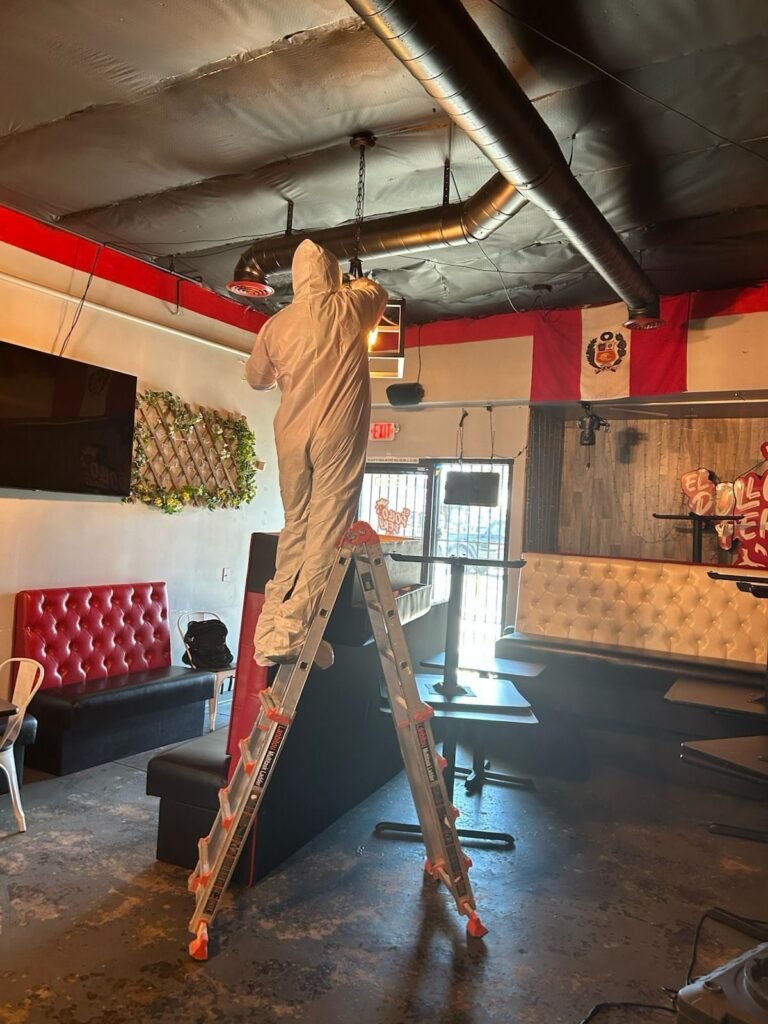
What to photograph before anything moves
What the last day is supposed to look like: base back on, paint dry, the vanity sitting where it always sat, and you walking the rooms with our crew chief while he writes down whatever is still wrong.