
Take the pictures before you start pulling the house apart.
Before anything gets moved, cut or thrown out in a water-damaged Long Beach house, shoot two wide photos of every wet room from opposite corners, the water line on the wall with a tape measure held against it, and the part that failed with its model plate. That last one decides most water claims here, and it is the first thing a plumber carries away.
What do I photograph first?
Stand in the doorway of the wettest room and take one wide photo that shows the whole room, then walk to the far corner and take another one looking back. Two frames, and the geography is on record: what sat where, how far the water traveled, what the floor looked like while it was still intact. Then the water line. Water leaves a mark on a wall, on a baseboard, on a sofa leg and on a cardboard box, and that mark is the measurement everything else gets argued from. Hold a tape measure flat against it and get the tape and the line in the same frame. Do that in every room that is wet, and then in the room next door that is not wet yet.
The dry room is the shot people think is a waste. Two days later, when the hallway turns out to have been wet all along, the photo showing it dry on night one is what settles when the water arrived.
What about the thing that actually leaked?
Photograph the failed part before anyone pulls it out, and again in your hand once it is out. A split braided supply hose. A cracked angle stop, that little oval valve on the wall under the sink that shuts the water off. A corroded fitting on top of a water heater. A dishwasher connection that let go in the night. A sudden break and a slow drip get treated very differently, and it is usually that one small object that decides which one this was.
Almost nothing that floods a house here comes out of the sky. Long Beach gets around twelve inches of rain in a year, so the water on your floor came out of a pipe, an appliance or the slab, and one specific part broke to put it there. In the 1950s tract kitchens off Bellflower and Woodruff it is usually the braided hose behind the dishwasher or the angle stop under the sink. Small parts, both of them, and both of them on the plumber’s truck by morning.
Get the model and serial plate while you are there. It is a sticker or a stamped metal tag on the back of the dishwasher, low on the side of the water heater, inside the washer door, and it carries the age of the thing that failed. Then keep the part itself: in a bag, in the garage, not on the plumber’s truck.
What if the plumber already took it?
Call and ask for it back, and ask for a copy of the invoice with the written description of what was found. A plumber’s own words about a burst line are worth having even when the piece itself is gone.
Do the timestamps on my photos actually matter?
Yes. The timestamp the camera writes inside the photo file counts for considerably more than a date you write down afterward.
Every photo a phone takes carries the date, the time and usually the location inside the file itself, put there by the camera rather than typed in later by somebody with an interest in the answer. A screenshot of a photo is a brand new file stamped with today’s date and stripped of everything that was attached to the original. Most messaging apps squeeze the picture down and drop that information too. Keep the originals on the phone, back them up the same night because phones get dropped in water on days like this one, and when the time comes to hand them over, send them as files or upload them rather than texting them across.
What do people always forget to photograph?
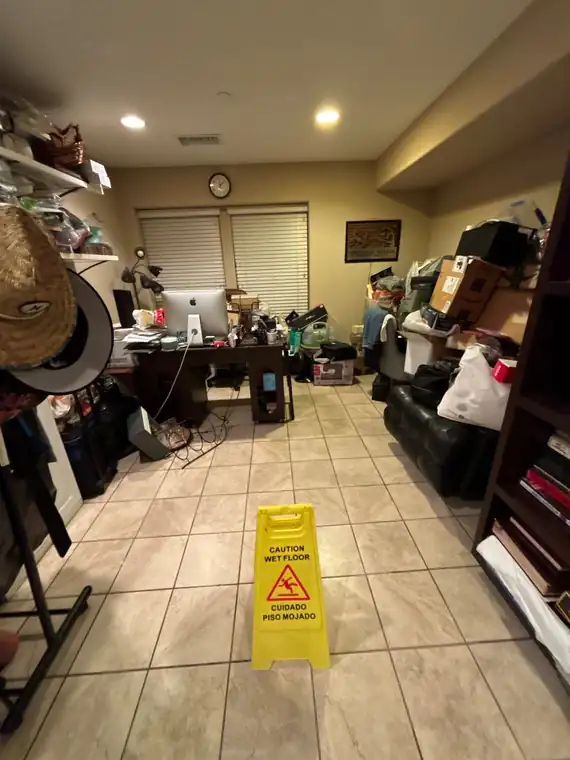
The source that failed, its model and serial plate, the inside of the cabinet under the sink, the ceiling above and the ceiling below, the far side of the wet wall, the damage that was already there, and the open wall cavity before it gets closed back up. Seven things, roughly in the order they get lost.
- The source. It gets fixed first, because stopping the water is the emergency, and then there is nothing left to photograph.
- The model and serial plate on whatever failed, which is what establishes how old it was.
- Inside the cabinet. The back wall under the sink, the underside of the sink base, the cabinet floor behind the toe kick. That is where the water has been sitting for longer than anyone thinks.
- The ceiling below, and the ceiling above. Water goes down through a floor and shows up in a light fixture, and it also runs along a joist and comes out fifteen feet from where it started.
- The other side of the wall. The wet side gets forty photos; the closet backing onto it gets none.
- The damage that was already there. The old brown stain ring with a fresh wet ring inside it. The crack in the slab. The floor that has never been level. Around Alamitos Bay and over the old Wilmington oil field the ground itself has dropped by feet over the decades, and it has been pulling foundations out of true since long before your dishwasher failed. Photograph the old damage honestly and say out loud what it is. It will come up, and you want to be the one who pointed at it first.
- The open wall, in the hours between the drywall coming out and the cavity being closed back up.
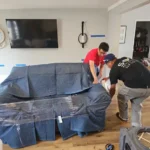
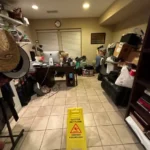

Can I move anything, or does it all have to stay where it is?
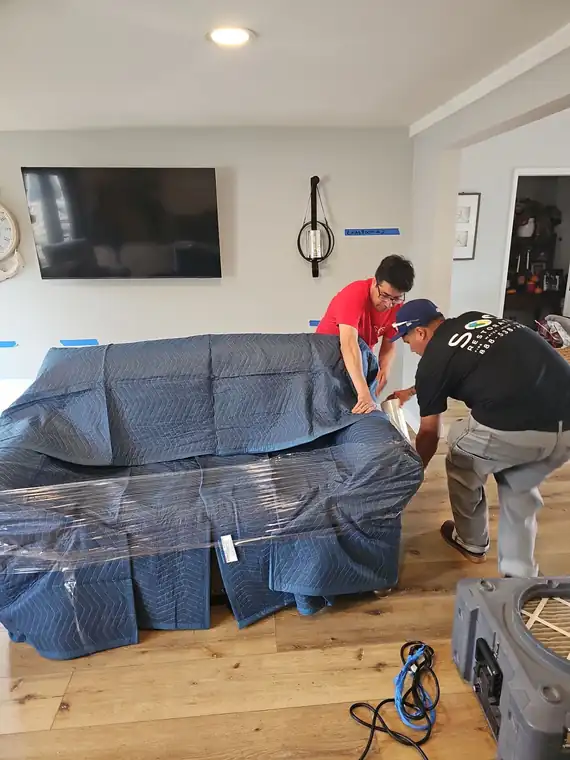
You can move things, and in a wet house you should: photograph the room first, then get the cardboard off the wet floor before it drinks the water up and collapses.
Nobody expects you to leave water standing in a hallway to prove it was there. Your policy asks for the opposite. The standard homeowners form, the template most policies are written from, puts the job of stopping the damage spreading on you: make the repairs that keep the loss from getting bigger, and keep an accurate record of what you spend doing them. That same form has a clause about neglect, which means the property you could have saved and did not.
Shoot it, then move it. Furniture legs go up onto blocks or squares of foil so the finish stops bleeding into the carpet. Open the cabinet doors, pull the rug off the hardwood, take the books off the bottom shelf. Each of those is a photo first and a decision second, and the whole sequence takes about a minute per item.
Photograph the receipt for whatever you buy at eleven at night, and then photograph the thing you bought where you put it. A receipt on its own is a number on a slip of paper. Sitting next to a picture of the plywood screwed over the window it paid for, it explains itself.
Watch what you sign at that hour. A tarp, a shop vac and a couple of fans are ordinary. Be slower with a large emergency invoice put in front of you at midnight, before anyone has properly looked at the loss.
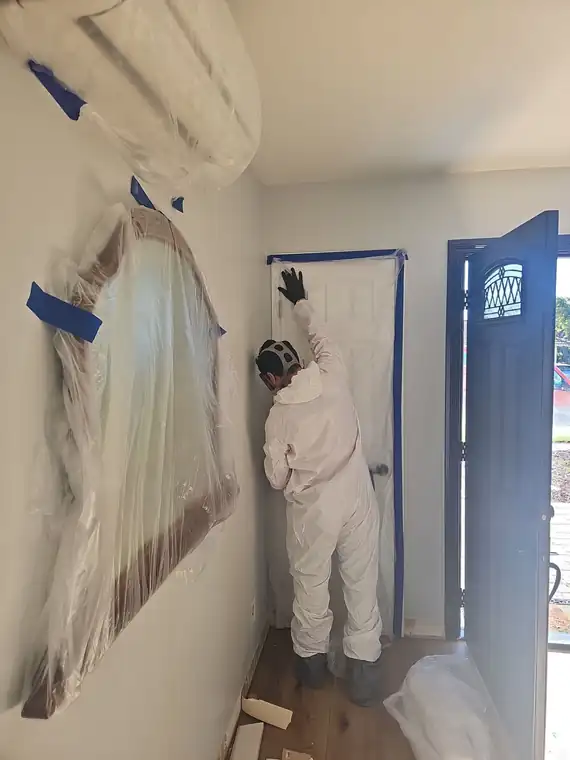
Do I photograph my furniture and my things too?
Every damaged item wants three frames: where it was sitting, what it looks like now, and the label carrying the model or serial number. It is more shooting than it sounds like. It is also the part everybody skips and then regrets, because the item is in a dumpster by the time anyone gets around to asking what exactly it was.
Shoot inside things, not only at them: the bottom drawer, the inside of the box, the underside of the mattress, the back panel of the dresser that was against the wet wall. Paper, books, upholstery and anything with foam inside it go from damp to finished fastest, so those get photographed before the sofa does.
If you rent, the insurance company for the building sends somebody out to photograph the drywall and the framing. Nobody on that visit photographs your sofa. Your own things are generally yours to claim on your own renter’s policy, and the only record of them is the one on your phone.
What should I keep photographing after the first day?
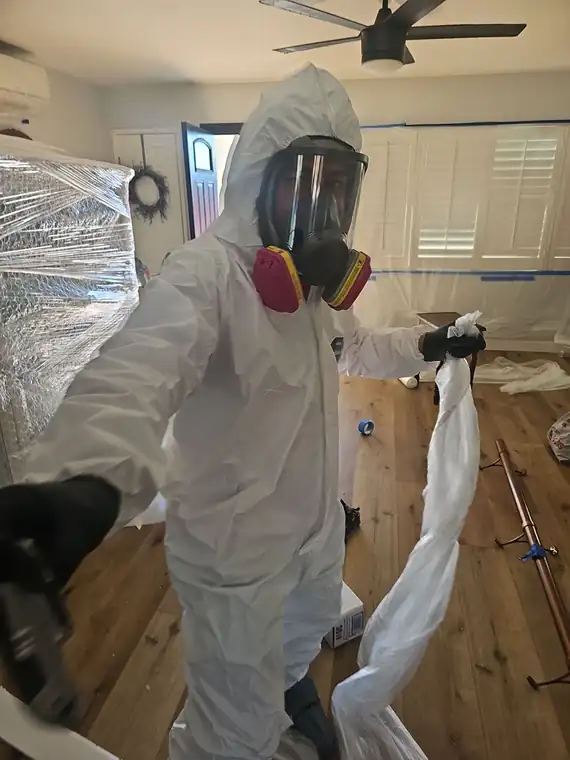
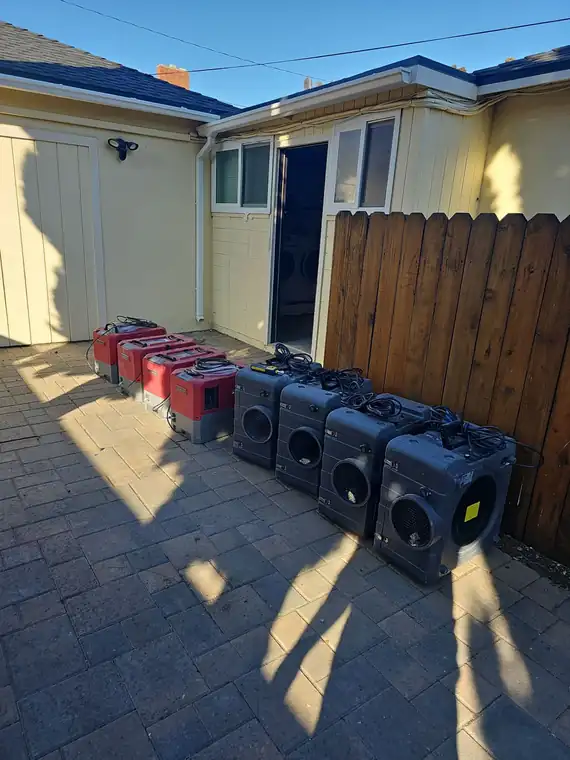
Once the drying gear is running, take one photo a day from the same spot in the same room, with the machines visible and countable in the frame: the air movers, which are the low flat fans pointed along the floor, and the dehumidifier. Drying equipment gets billed per machine per day, and a daily photo of the room is what catches a bill for five air movers on a day the room had three.
Photograph the moisture meter’s screen while it is held against the wall it is reading, with enough of the room in the shot to place it. The reading only counts if the screen and the wall are in the same picture. A number written in a log is just a number. It starts to mean something next to a reading from a dry part of the same house, taken the same day.
The open wall has a deadline. Once the drywall goes back on, nobody sees the stained framing, the squashed wet insulation or the pipe that started it again without cutting the wall open a second time.
And the ceiling in the unit below yours, if there is one. Knock that night and ask to shoot it, because that ceiling is the only place your water shows from the other side, and it gets dried, sanded and painted long before anybody asks a question about it. Once it is white again, the argument over who pays when the water came from the unit upstairs is two people describing a stain from memory.
How many photos is enough?
Two hundred frames for a kitchen and a hallway is not too many. More than feels reasonable, always. Storage costs nothing, and whoever ends up reading the file scrolls fast and stops on maybe six pictures. You cannot know in advance which six, which is the whole reason to shoot all two hundred.
Sort them that same night, while you still know which wall is which: one folder per room, a second for your things, a third for receipts and invoices, and a short note saying what each set shows and when it was taken. Doing it the next morning takes twice as long and you will get two rooms confused.
The house that gets walked through on day five is not the house that flooded. The baseboard is off, the carpet is gone, the drywall is cut two feet up the wall, and most of what mattered has been hauled to the curb. Your photographs are the only version of that room that still exists. Where they go next, and what belongs in the file, is the water damage claim itself.
The rest of what people ask at the same kitchen table is in the guides.
Is Mold Testing Worth It, or Is It a Scam?
Smoke Damage When the Fire Was Next Door
Pipe burst? What to do in the first hour
If you are standing in it in Long Beach right now with a phone in your hand and no idea what to shoot first, we pick up at any hour on (657) 660-4185.