
Can we stay in the house while you work?
Most of the time, yes. You can stay in your home while a water damage crew works in Long Beach. The drying equipment takes over two or three rooms and the rest of the house is still yours, loud and warm but livable. Sewage and heavy smoke are the exceptions. Mold work depends on where the plastic goes.
Is it safe to sleep there while the machines run?
For clean water off a supply line or a water heater, yes. You can stay, and most people do.
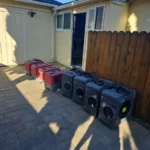
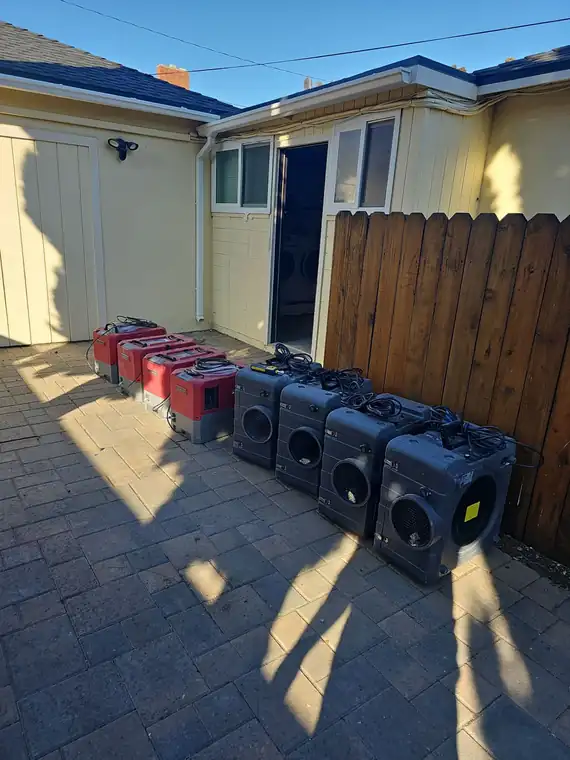
Here is what you would be sleeping around. The baseboard comes off in the wet rooms and the drywall gets cut a foot or so up the wall, which is done only so the hollow space behind it can dry from the inside. Air movers, the flat fans that sit on the floor and blow sideways along a surface, point into the bare studs. At least one dehumidifier runs beside them with a hose into a bucket or a sink. Cords go under doors, furniture goes up on foam blocks or over to the dry half of the room, and none of that stops you sleeping down the hall.
Plenty of spills never get that far. A glass knocked off the nightstand onto bedroom carpet, blotted with a towel before you went back to sleep, does not need a crew and it does not need a hotel. Pull the bed off that wall, aim a fan low across the patch, leave the closet doors open. Two evenings later put a bare foot on it. Cool but not damp, and the room smelling like the room, means you were never going anywhere.
What actually costs you is switching the machines off. People unplug them at eleven at night because the noise is unbearable, plug them back in at seven, and the wall takes back overnight most of what it gave up during the day. That is how a drying job doubles in length. If you cannot live with them running, that is a real reason to sleep elsewhere, and a better one than most. There is more on what the daily readings are doing in why the house is still wet on day four.
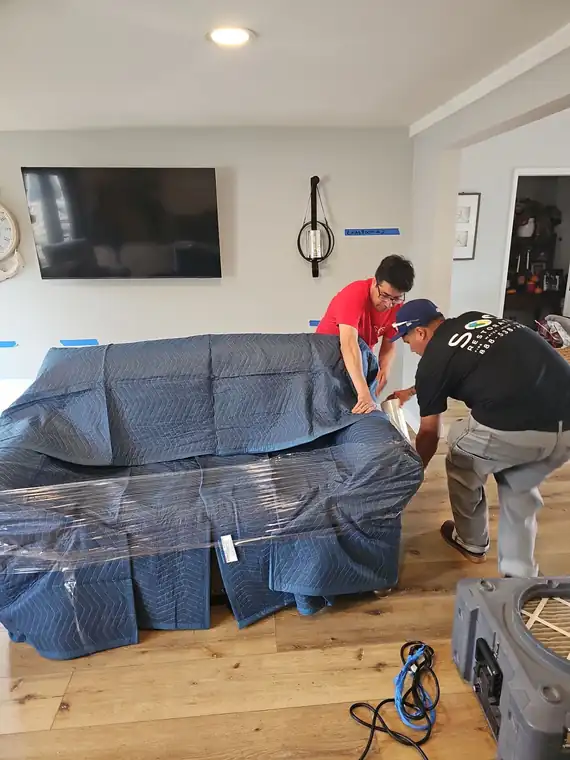
How loud is it, and can you sleep with it running?
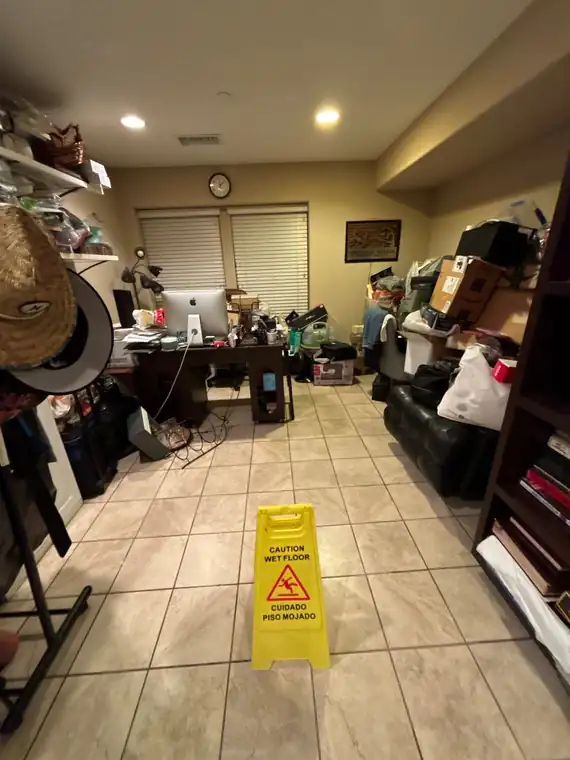
Loud enough that you hear it in every room, and yes, most people sleep through it by the second night. An air mover is about a box fan held close to your ear. The dehumidifier beside it is a compressor that kicks on and off all night. Together they make one steady roar, and steady is the part that lets you sleep.
The room also gets warm. Pulling water out of the air puts heat back into it, so the space being dried runs several degrees above the rest of the house.
Do not open the windows to help it.
The hour you will most want to is dawn, and on this coast dawn is the worst hour for it. The bedroom is hot, the machines have been roaring since midnight, and the air waiting on the other side of that glass is at its wettest of the whole day, a little over 83 percent on an August morning here. It dries out through the afternoon instead of overnight, which is backwards from how most people picture a cool morning. Open that window and you hand the wall back the moisture the dehumidifier spent all night taking out of it. The year-round version of that pattern sits on the water damage page.
Move the bed if there is anywhere to move it to. Shut the door of the room being dried unless the crew asked you to leave it open, and ask them which doors matter. On most jobs two or three of them do and the rest make no difference.
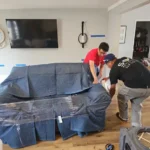
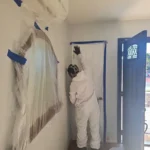
Can we stay while the mold work happens?
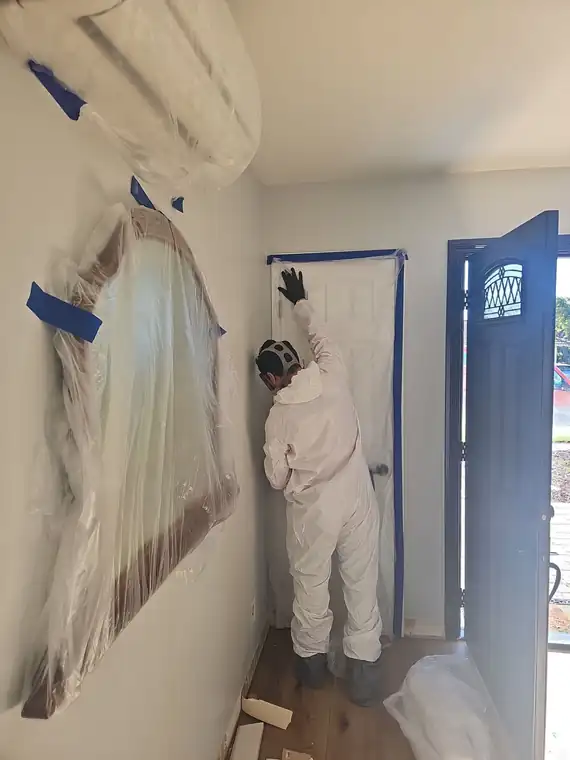
You can usually stay in the house outside the sealed room, and never inside it. A mold job gets closed off with plastic sheeting taped across the doorway and a zipper cut into it, plus a machine pulling air out of that room through a filter and pushing it outdoors so nothing drifts into the rest of the house. Crews call that sealed room containment. It stops being your room until the plastic comes down. The kitchen, the bathroom, the other bedrooms and the front door all still are.
No test tells you whether it is safe to sleep there tonight. There is no number a spore count has to come in under, because nobody has ever set one, and California’s public health department tells people outright not to use counts of what is floating in the air to judge how bad a building is or how fast it has to be dealt with. That is walked through on the mold page. Where mold is already visible, testing mostly confirms what you can already see. So when a company hands you a lab report and says the family has to be out by Thursday, ask what in that report sets Thursday.
What that same department does say is the part worth reading twice, and it is about the house, not the lab. Visible water damage, materials that are still wet, mold you can see or smell: any of those raises the odds of breathing problems for the people living there. The wetter and more widespread it is, the higher those odds climb, and children take it harder than adults. In practice that means asthma starting or flaring, more chest infections, a runny blocked nose that will not quit, wheeze, cough, and trouble breathing.
So the decision runs on how much dampness there is and who lives with it. Not on a lab result. If somebody in the house has asthma, that is a conversation for their doctor, and we will tell you to make it.
Can I sleep in my house after a small fire?
Not until the fire department has released the structure. Until they have, the answer is no whatever anyone else thinks, and that call is theirs to make. Once they have, four things decide it: power, gas, a working bathroom, and whether the smoke got into the bedrooms.
Smoke does not stay where the fire was. It follows air, so it climbs stairwells, rides return vents, gets into closets, and settles on cold surfaces: window glass, exterior walls, the inside of drawers nobody opened. A stovetop fire that burned out in a few minutes can leave a bedroom at the far end of the house smelling of it for weeks.
The useful test is the one your nose already ran. Stand in the room you sleep in with the door shut. If it still smells strongly of smoke, you are not going to sleep in there.
What about the kids, and what about the dog?
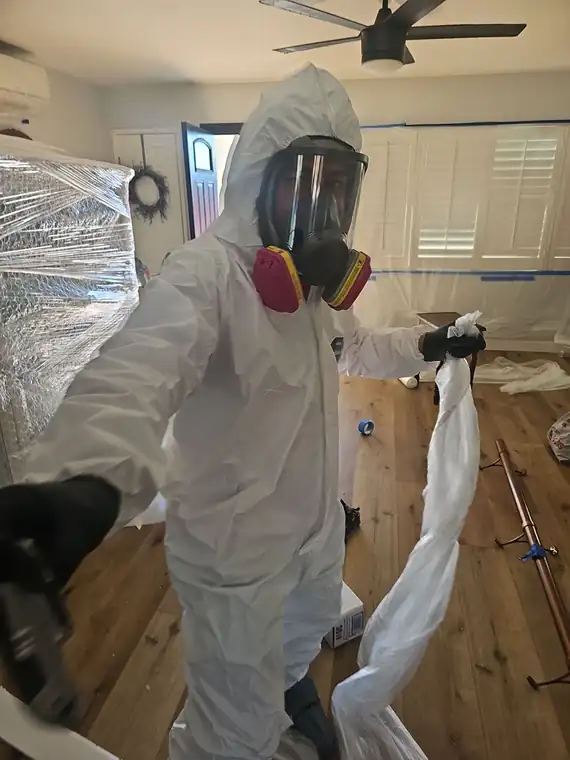
Yes to both, in the rooms that are not being dried. The two things that actually hurt a kid or a dog on a drying job are the cords and the dehumidifier bucket, and neither of those is a reason to leave the house. Air movers sit on the floor at exactly toddler height, cords cross doorways, and a hose draining into a bucket is a water bowl as far as the dog is concerned. Ask the crew to run the cords along one wall and tape them down before they go for the night. It takes five minutes.
Move a crib out of any room that shares a doorway with the plastic, and keep it out until the plastic comes down. Containment only works while it stays shut, and a curious eight-year-old, or a cat that now badly wants the one room it has been shut out of, will find the gap. Say who lives in the house before the crew tapes anything. They will tape it differently.
If your house went up before 1980, and about four out of five in Long Beach did, the paint the crew just cut through has to be treated as leaded until a test says otherwise. That is federal rule, not crew preference: the work area gets sealed and cleaned before anybody uses it again. The sealed room is also held at slightly lower air pressure than the hallway, so air walks in and nothing walks back out. Leave the zipper open and that stops being true, the dust goes down the hall, and every room outside it gets cleaned again before anybody sleeps in it.
If we do leave, who pays for the hotel?
Your policy might, or nobody might, and we cannot tell you which, because we have not read it and are not a party to it. What can be said is how these policies are generally written. Most of them pay what is called loss of use, sometimes written as additional living expense, which is money toward staying somewhere else when a covered loss leaves the part of the house you live in “not fit to live in”. That last phrase does all the work. A house that is loud and half opened up but still has a dry bedroom and a working bathroom is inconvenient, and carriers do not usually pay for inconvenient. The ones that clear the wording have no bathroom, no power, or sewage in the only hallway.
Two things about that money decide whether tonight is worth booking. It pays the gap, not the bill: the hotel above what staying home would have cost you, the takeout above the groceries, the storage unit, the longer school run. And it runs out, usually at a fraction of what the policy carries on the building itself, sometimes at a count of months instead. Three nights burned on a house that was only loud come out of the same allowance you may badly want in week three. How a carrier reads any of that is the claim page’s job, not this one’s.
Call the carrier before booking anything and ask it in those words: is this loss of use, and what is my limit. Then keep every receipt, down to the bad hotel coffee.
So how do you actually decide, tonight?
Five situations where packing a bag is the right call, and none of them are close:
- Sewage came up into living space. Those rooms are off-limits until they have been cleaned and dried, and the three categories of water is the short version of why.
- There is no working bathroom, or no power to the part of the house you live in.
- The only bedroom is the room being dried, or the only way into it runs through the plastic.
- Somebody in the house has asthma or another respiratory condition and their doctor says go.
- You have not slept in three nights and the alternative is unplugging the machines.
Everything else is a judgment call and it is yours. Ask whoever is standing in your hallway which rooms are off-limits tonight, how many days of equipment they expect, what would make that longer, and what would make it shorter. If you want to know who you are letting through the door before any of that, the about page says who we are, and the rest of these guides take up the questions that come after this one.
Smoke Damage When the Fire Was Next Door
Pipe burst? What to do in the first hour
Is Mold Testing Worth It, or Is It a Scam?
If you are standing in it tonight and cannot tell whether to stay or pack the kids up, call (657) 660-4185 and ask, because somebody in Long Beach picks up at any hour and the honest answer is often that you are fine where you are.