
Three days of fans and the wall is still wet
Three days of fans and the wall is still wet because a fan removes no water from a house. It moves air, hands the water to the room, and once that air is full the wall stops giving anything up. In Long Beach the air starts out loaded. That is why a water damage drying job stalls here.
Why is my house still wet after three days of fans?
Your house is still wet because the fan is doing half the job and nothing in that room is doing the other half. Drying a building is really three separate tasks. Somebody has to get the standing water out. Something has to coax the water that soaked into the wood and the drywall back into the air. And something has to take that airborne water out of the room before the air fills up. A hardware store rental covers the middle one and a sliver of the last.
Picture the wet stud as a crowd trying to get out through one door. The fan is a man shouting at them to hurry up. If the hallway on the other side is already shoulder to shoulder, the shouting changes nothing at all. A dehumidifier empties the hallway.
The water does not leave. It moves to the coldest thing in the room.
Water coming out of a wall goes into the room air first, and then it has to leave the room air too, onto a cold dehumidifier coil or out an exhaust. If nothing takes it, it comes right back. The air hands it to the coolest material within reach: the closet that was dry this morning, the far wall of the room, the underside of the door casing.
A soaked carpet pad in one bedroom is holding several gallons. Nothing about a fan makes that weight leave the building. It hands it to the air, and the air sets it back down somewhere else in your house.
People find the second wet spot and assume a second leak. Usually it is the first leak, relocated.
Day one is dramatic. Water comes off fast, the number drops, everybody feels better. Day four looks like nothing at all is happening, and that is not the equipment quitting on you. It is the easy water being gone.
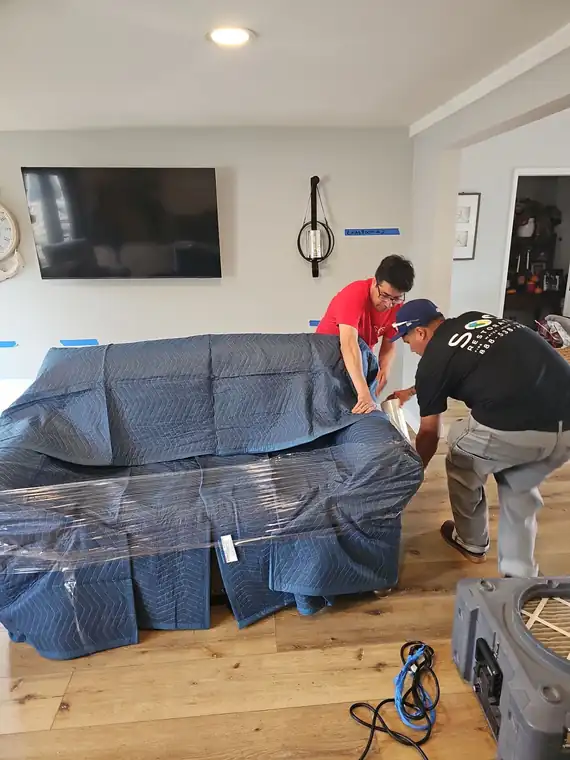
Three kinds of water are in that wall and they leave at three different speeds. The part you could have vacuumed up goes first. Then the water held in the pores of the material the way a paper towel holds it against gravity, which moving air strips off the surface without much trouble. What is left is bound water, gripped at the molecular level by the gypsum inside the drywall, the paper facing on it and the cellulose in the wood. Bound water does not care how loud your fan is.
All of it comes down to one gap. The face of a wet wall sits at 100 percent humidity and the room does not, and water only travels while that difference is open. That is how a room full of noise and a soaked bottom plate, the flat board your wall studs are nailed to, can read the same number for a day and a half. The fan is doing its one job perfectly. There is nowhere for the water to go once it reaches the air.
Roughly in order of how long each one makes you wait:
- Carpet and pad, if the pad is lifted or pulled: fast. A pad still glued down under the carpet dries last of anything in the room.
- Half-inch drywall: days from a cut edge, closer to a week through a painted face.
- Plaster over wood lath, the thin wood strips nailed across the studs in older houses: slow, because there is so much mass in it. In Wrigley and the older streets of Bixby Knolls this is the default wall, not the exception, and it is why a house from 1925 takes longer than a condo from 2005 with the same water in it.
- Solid hardwood over a plywood subfloor: slow, and it will cup before it dries.
- Framing lumber. Weeks. Push a pin meter, the little probe with two spikes on it, into framing in this climate and dry reads somewhere around 10 or 12 percent, soaked reads 25 and up, and the bottom plate is the last part of the wall to come down.
- A concrete slab: still giving off moisture long after every surface in the room reads dry. A bottom plate sitting on a slab can read the same number a week apart, because the slab underneath is feeding it about as fast as the air is taking it away.
Why does a closed room dry faster than an open one?
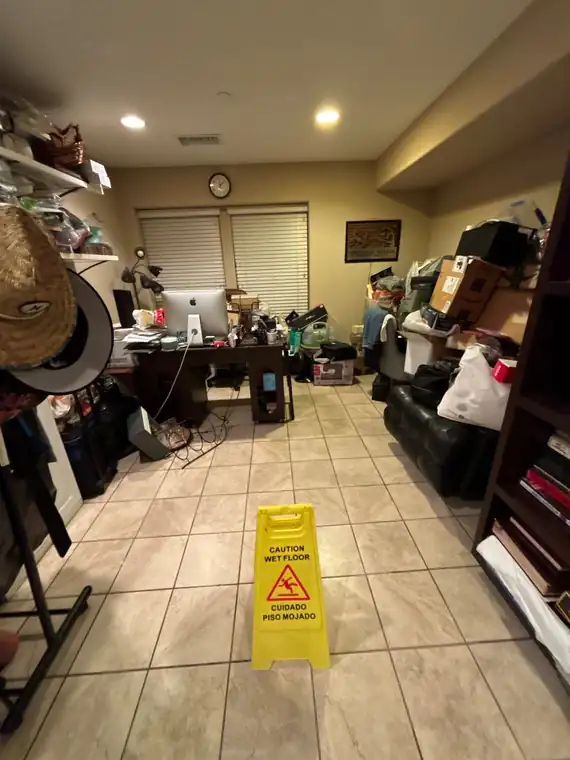
Opening the windows is the first thing everybody does, and for most of the year here it makes the room wetter. The air coming in is carrying nearly as much water as the air already standing in your living room, so the gap that was pulling moisture out of the wall closes the moment the sash goes up. That is what the coastal air does to a drying job here. Around 165 mornings a year start under a marine layer with no sun to help.
An open window can only ever get your room as dry as the outside air already is, and from June through September the outside air here is holding plenty. The dew point over those months averages 59.4 degrees, and a dew point is a floor. Outside air will not dry a surface below the moisture it is already carrying.
You are not ventilating. You are importing.
Sealing is the opposite move. Shut the door, tape plastic over the doorway if the job is bad enough, and let the dehumidifier build one small climate in that room that is drier than anything outdoors. The gap between the wet wall and that manufactured air is the whole engine.
There is a real exception and it is worth watching for. Long Beach gets roughly 49 days a year when the humidity outside falls to 20 percent or below, most of them in November and February, on an offshore wind. On one of those days, open everything you own. That is free drying and it beats anything you can rent. Keep an eye on hardwood and trim, which move fast in air that dry.
Should I turn the equipment off at night?
No, and it is the most expensive small mistake people make. The moment the machine stops, the materials around it start pulling moisture back out of the room air, so eight hours off does not pause the job for eight hours. It gives back ground you already paid for. Here the quiet hours are also the wet ones: August air in Long Beach averages 83 percent humidity at five in the morning, and it is drier at two in the afternoon than at any point overnight.
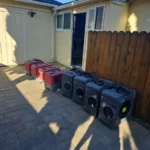
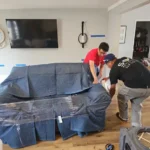
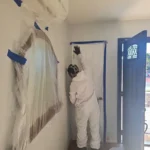
What a rented fan and dehumidifier can actually do
A rental will genuinely dry the right job, and one bathroom is exactly that job: clean water off a supply line, one of those small braided hoses feeding a sink or a toilet, caught the same morning, tile floor and drywall. Pull the baseboard, aim the fan along the wall rather than into it, shut the door, and run the dehumidifier without stopping. A cup of water on sealed tile needs even less. Towels, a fan, and a look back in two days.
The limits are worth knowing before you pay for a week of it.
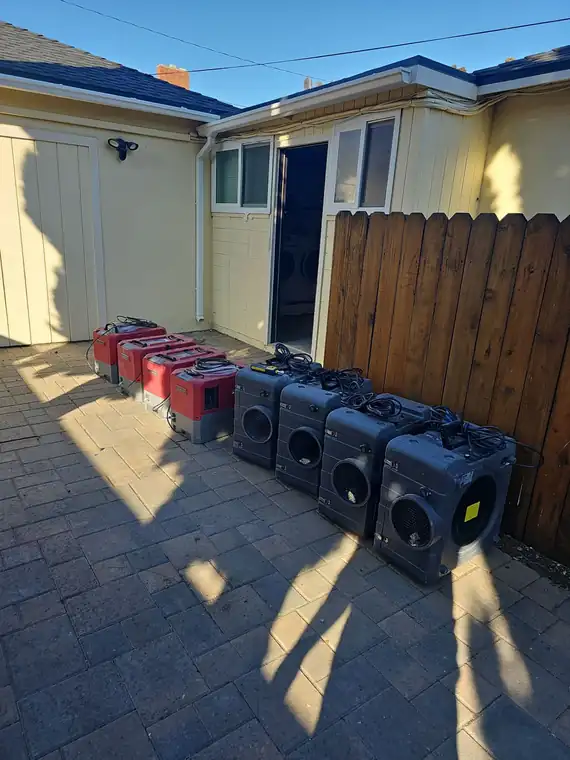
- A box fan makes a wide, slow cone of air. An air mover, the low flat blower you see sitting on the floor at job sites, pushes about 2,500 cubic feet a minute in a thin sheet that hugs the wall, and that sheet is what strips the still damp layer of air off the surface. A box fan on a chair moves more air in total and none of it where it matters.
- The pints-per-day number on the box was measured in warm, humid air. Your room, once it starts drying, is neither, so the output falls off exactly when you need it most.
- A consumer dehumidifier ices up its coil in a cool room and spends part of every hour defrosting itself instead of drying anything.
- Air cannot reach what is sealed off from it. Insulation behind an intact painted wall, water under a tile bed, the dead space under the toe kick, the set-back board a kitchen cabinet stands on. No fan changes that, at any size.
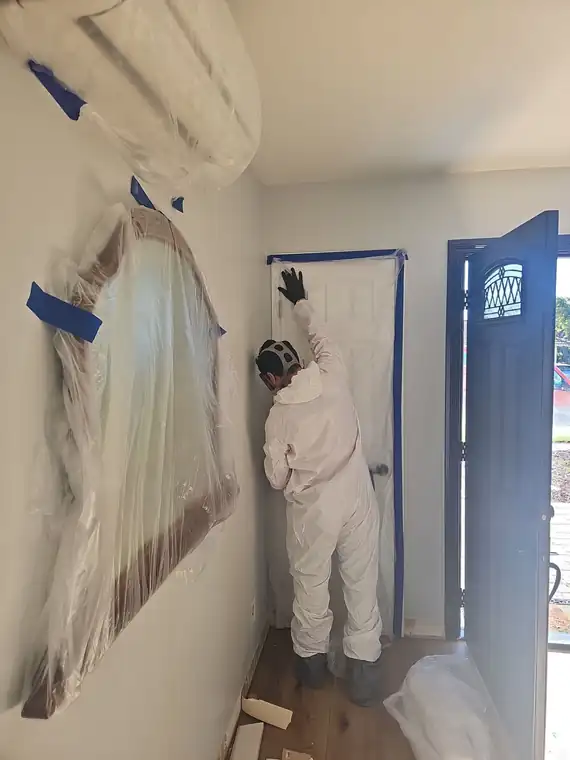
How do I know whether it is drying at all?
Take one moisture meter reading a day, in the same marked spot, and write the number down. A falling number is the only proof you have that any of this is working, and a flat number is the only warning you are going to get that it is not. A meter costs less than one day of rented equipment and it ends the argument you are having with yourself.
Before you read the wet wall, read the same material somewhere the water never reached. The far bedroom wall, the hallway closet. That reading is your target, because dry means back to what the rest of the house reads, not a feeling in your palm.
Mark the spots in pencil so you read the same square inch tomorrow. Read them at the same time of day, morning against morning. A reading at seven and a reading at three in the afternoon will disagree enough in this city to look like a broken meter. Write the room temperature and the humidity next to each number.
What if the number will not move?
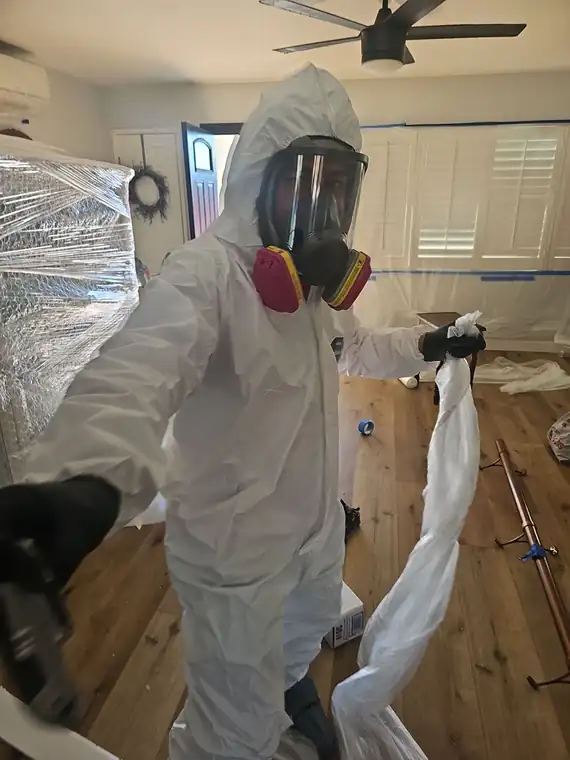
A reading that has not changed in two days, with the equipment running the whole time, is telling you one of two things. The water is somewhere the air is not reaching, or the source never actually stopped. Work down the list in that order.
- The source. The supply line that was weeping when you started may still be weeping. A roof that only leaks when the rain drives in from the southwest reads dry all week and soaks again on the next storm.
- What is sealed. Paint and the paper face of drywall both slow water vapor down, so a cavity can stay soaked behind a wall that reads dry on the surface. That is why crews cut or drill low on the wall instead of trusting the face.
- Water under a tile bed, under laminate, in a pad that is still glued down, or in the dead space beneath a cabinet is not in the air stream at all.
- The room itself. A door left open, a return vent, the wide grille that pulls air back toward the furnace, taking that room’s air with it, a window cracked for fresh air, and the small dry climate you built leaks away. The machine spends the night drying your hallway.
- The ground. Naples and the Peninsula sit on dredged fill over what used to be a tidal marsh, and the water table under them rises and falls with a tide that averages close to four feet, twice a day. A crawl space or a slab there can be fed from below with no plumbing failure anywhere in the house.
When is it time to stop drying and open the wall?
It is time to open the wall when the readings have been flat for two days, when the water was not clean to begin with, or when the room has a low earthy smell the fans are not moving. Cutting is the cheapest way left to find out what you are dealing with, and the drywall you take out was coming out anyway.
Nobody can tell you from a photograph whether anything is growing behind the board. By the third day that question is already open, and the only way anybody answers it is to take a piece of the wall out and look. What turns up there can turn a drying job into removing what got wet and stayed wet.
Three flat days usually means the room needs a bigger machine, an LGR dehumidifier, the kind that keeps pulling water at 40 percent humidity where a rental has already given up. Air movers laid down at the baseboard instead of pointed at the wall. One person taking the same three readings every morning. That is what a water damage job in Long Beach is: two machines, a meter, and somebody who comes back. What the first hour should have looked like is its own question, and so is whether you can sleep in a house with dehumidifiers running. Both sit with the rest of the guides.
Why Category 3 Water Costs More to Clean
What a Home Inspection Misses About Mold
Why the first insurance check is smaller
If the fans have been running three days and the wall still reads wet, call (657) 660-4185 and somebody in Long Beach will pick up at any hour, because half the time the next move is something you can do yourself before anybody drives out.