
The inspection report says mold and escrow is waiting on you
The report says mold and now everyone is waiting on you. A general home inspection in Long Beach is a look, not a cut, so nobody opened the wall and nobody yet knows how far the water went. That second look is where mold inspection and removal in Long Beach actually starts.
Does a home inspection include a mold inspection?
No. Mold sits in the exclusions of the agreement you signed before the inspector ever showed up, and a general inspection is a walkthrough with nothing cut open. Read that page of the agreement. It is usually the one nobody reads.
What the inspector can do is real, though. They can see the stain on the closet ceiling, smell the crawl space under the floor, notice that one bedroom wall is freshly painted and the other three are not, and press a moisture meter to the baseboard, a pen-sized tool that reads how wet the wood is behind the paint. What they cannot do is cut. No hole in the drywall, no lifted carpet, no pulled kick plate under the cabinets, and nothing behind the tile.
That line in the report is the inspector doing the job correctly. The question you are left holding is outside what you paid for.
Should I get a mold inspection when buying a house?
Only when nobody can find the water. The split is sharper than the people selling the test tend to explain.
If the inspector saw the growth and could point at the water that made it, a supply line under the sink, a shower pan leaking through its tile, a roof valley dumping into that corner, you already know enough to act on. Federal guidance from the EPA is blunt here: when you can see the growth, sampling is usually unnecessary. A lab naming the species buys you paper. It does not buy you a decision you did not already own.
The second visit earns its money in the opposite case. The house smells and nobody can find the source. There was a leak two winters ago, the seller says it was handled, and there is no invoice for it. One wall is new drywall and the other three are original plaster. That is the case the same guidance says is worth hiring somebody experienced for, because a smell with no visible source is genuinely hard to chase.
What am I actually paying that person to do?
Ask for a moisture investigation, not a lab report. You are paying for somebody with a meter, a thermal camera that shows the cold patch where water is sitting inside a wall, and your written permission to open a small area of drywall or pull a run of baseboard. Refuse an air sample handed to you as a verdict on the house. No agency has ever set a number for mold in indoor air, so no lab result can say a house passed. There is nothing to pass. The long version of that argument sits in a separate piece on whether mold testing is worth paying for.
Is this something we should just back away from in terms of buying this house?
Mold is a repair. The water behind it is what decides the house, and four questions get you there: where did the water come from, can that source be shut off for good, how much of the structure did it touch, and does this house have a standing condition that will keep making water no matter who fixes what.
That last question is where Long Beach differs from wherever the buyer is moving from. A crawl space in Naples or out on the Peninsula that reads damp may have no plumbing problem at all. Those islands are made ground, sand pumped out of the harbor and held behind a seawall from the 1930s that the city has only partly replaced, and a high tide still puts water across the sidewalks. Damp there is something you manage for as long as you own the house, with heavy plastic laid over the dirt under the floor and a dehumidifier running. Nobody repairs it once and closes it out.
Coastal air keeps this whole city damp enough that a little surface growth in a closet against an exterior wall is ordinary and proves nothing by itself. A buyer coming from a dry inland market reads it as a leak. The humidity readings for Long Beach are the fastest way to see why it usually is not.
On a pre-1980 house, budget for the asbestos survey and the delay before you argue about price.
Will an asbestos survey hold up escrow on a pre-1980 house?
An asbestos survey can hold escrow up, and it is the age of the house that sets it off, not the mold. Nearly four out of five homes here went up in 1979 or earlier, so asbestos and lead paint get treated as present until somebody takes small samples of the old material to a lab and rules them out.
A good share of the city is older again, roughly a third of it built before 1950, so the list of material to sample runs long on those houses. Plaster, floor tile and the black glue under it, duct wrap, roofing.
The delay is not the lab work. It is the notice. The regional air-quality agency wants that survey done before anything is torn into, and the break given to a single-family house runs out once more than a hundred square feet of asbestos-containing material is coming out. Past that line, ten working days of notice have to be filed before anyone starts. A positive result on Monday can mean demolition does not begin for another two weeks.
What can I ask the seller to do about it?
You can ask for anything. Only four asks are worth writing into an addendum, the page attached to the contract that actually binds, because only those four can be checked once you have the keys.
- Repair the water source and hand over the plumber’s or roofer’s invoice, dated, with the scope written on it rather than “service call.”
- Cut out the wet drywall, pull the baseboard behind it, and put the material in a dumpster. Not sprayed, not sealed, not painted over. Dead mold still sets some people off, which the EPA states plainly, so killing it is not the same as finishing the job.
- Let your own person open the cavity before close, inside a written access window. A seller who will not give up twenty minutes and one drywall cut is telling you something.
- Take a credit and handle it after you close. That is often the cleanest outcome, because you set the scope and you are standing there when the wall comes open.
The line to refuse is the one on the addendum reading “mold treatment performed.” A fogger, the machine that blows chemical mist through the rooms, with no material removed and no source repaired, leaves you a house that smells fine on the final walkthrough and is unchanged inside the wall. Fix the water or it comes back.
Does mold have to be disclosed when selling a house?
Yes, in California. The Transfer Disclosure Statement, the form the state makes a seller fill out, asks you to disclose known material facts about the property, and a past water intrusion is a known fact whether or not you repaired it. A repaired leak with an invoice behind it is a far easier disclosure than an unrepaired one the buyer’s inspector finds for you. How to word it for your own sale is a question for your agent, and for a real estate attorney if the repair was a big one.
The part you control is the physical file, and it is the part that gets argued over a year later: photographs of the material before anyone touched it, an invoice naming what came out and how far past the visible edge it was cut, the separate invoice for the plumbing or roofing repair that stopped the water, and the moisture readings from the last day, set against a dry room in the same house.
One Long Beach detail while you build that file. The city counts its plaster and drywall patch allowance across the whole building instead of room by room, so the amount of wall you can open before a permit is required runs out faster than people expect. A bathroom and a hallway can cross it between them. The threshold is on the cost page. Past it there is a permit, a permit is public record, and what your file says had better match what the city has on the address.
I'm selling. What should I do before the buyer's inspector gets here?
Fix the leak first, then cut out the wet drywall, in that order. Do it the other way around and you pay for the same repair twice, because the wall you just closed up gets wet again on the next rain or the next load of laundry.
Then leave the evidence alone. An inspector who finds fresh paint over a stain writes up the fresh paint. Do not run a fogger through the house the week before showings, and do not take treatment from anybody who will not write down what material was removed.
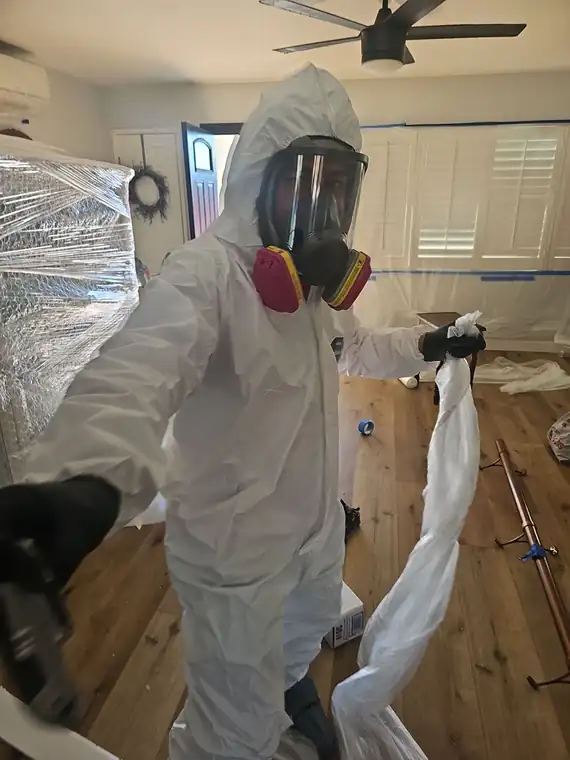
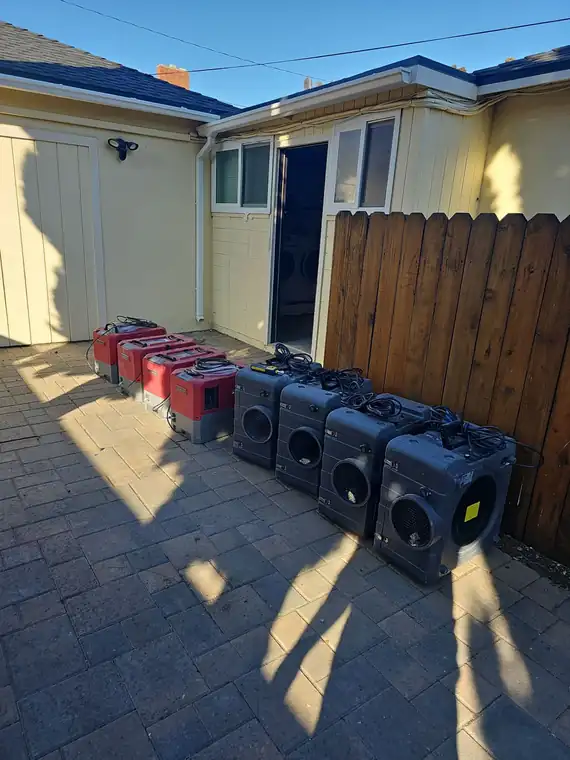
If nobody has looked at the water side of it yet, meaning where it came in, how far it traveled, and what is still wet inside the wall, that is the part we do. Mold removal and inspection in Long Beach starts with a meter and the source, before anybody talks about a sample. The rest of what people ask us around a sale is in our other Long Beach water and mold guides.
Can We Stay in the House During the Work?
What does O&P mean on my damage estimate?
What to photograph before anything moves
If the report says mold and nobody has looked yet at where the water came from, that is the call to make: we pick up in Long Beach at (657) 660-4185 at any hour, tonight included.